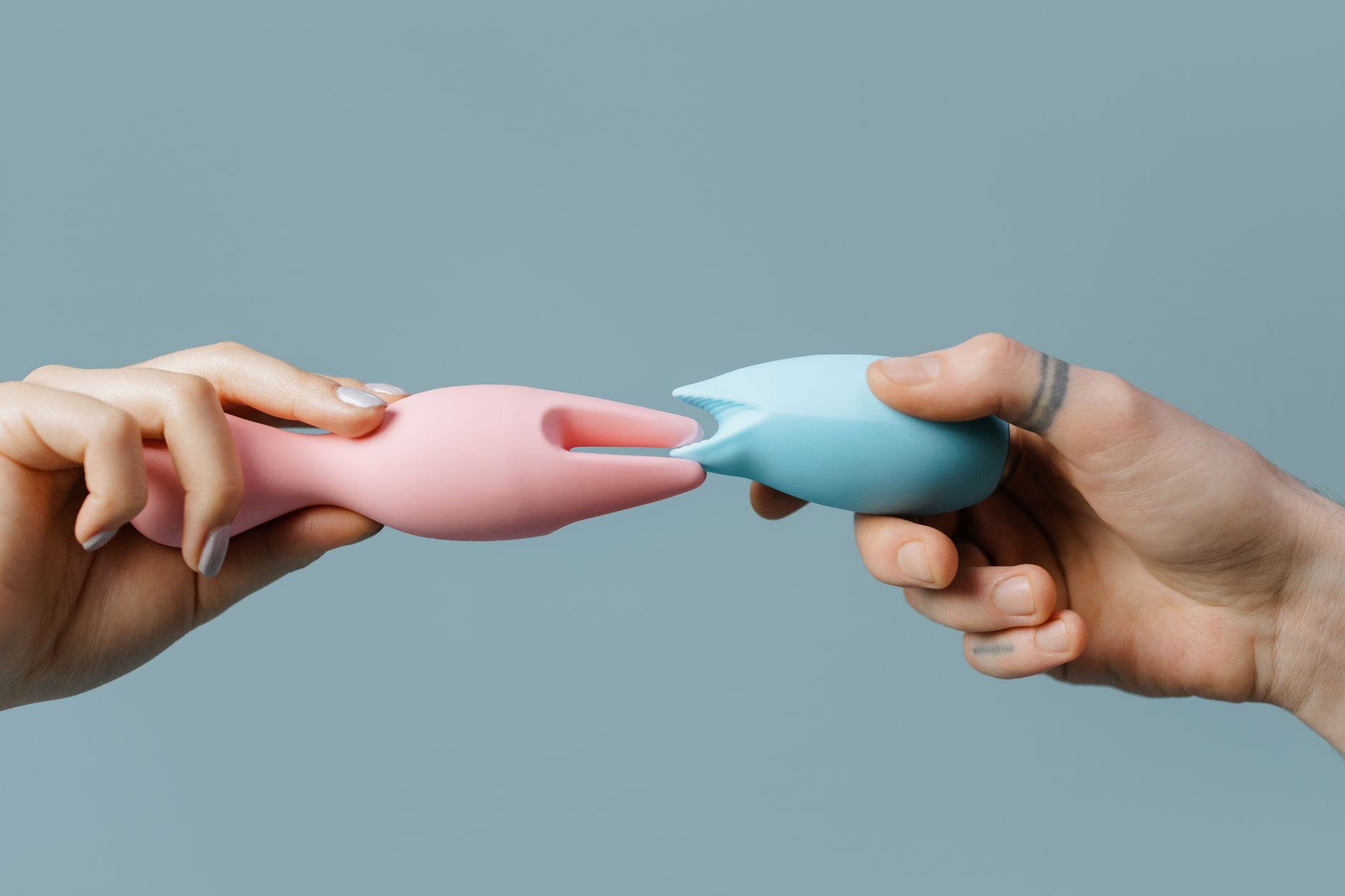
You buy a lemon clitoral vibrator expecting it to work the same way every time. Vibration equals sensation. Sensation equals arousal. Arousal equals orgasm. That's the fantasy. The reality is messier, more interesting, and honestly, a lot less stressful once you stop fighting it.
Pleasure doesn't follow a script. Some days your body responds instantly to a high-intensity pattern. Other days, the exact same rhythm feels too aggressive or weirdly muted. You're not doing it wrong. Your nervous system is just being a nervous system.
Most people think vibrators work by being strong enough to trigger sensation. That's only half true. The rhythm, the pattern, the tempo of that vibration is what actually creates arousal. Your clitoris has around 8,000 nerve endings, and they respond to timing and texture way more than raw power.
When you're using a lemon vibrator, you're not just applying pressure. You're creating a series of micro-stimulations that travel through nerve pathways. If the rhythm doesn't match what your nervous system is ready for, the signal gets lost, no matter how expensive or powerful the device is.
Think of it like music. A 120-beat-per-minute song feels like dancing. A 200-bpm track feels chaotic. It's not about volume. It's about whether the rhythm aligns with your body's readiness.
Start by slowing down your expectations. Seriously.
Most vibrators have a speed or intensity dial. Most people immediately jump to 60 or 70 percent. Don't. Start at pattern 1 or the lowest intensity setting, even if it feels underwhelming. Spend three to five minutes there. Your job is not to get off. Your job is to notice what your body is responding to.
You're looking for the moment when the stimulation stops feeling external and starts feeling like actual arousal. That's the rhythm sweet spot. It might be gentle. It might surprise you.
After you find that baseline, test incremental changes. Stay on pattern 2 for a few minutes. Then pattern 3. You're mapping your nervous system's preferences, not rushing toward a finish line.
When you discover that your body responds best to a mid-range pattern instead of maximum intensity, that's not a weakness. That's valuable data.
Pleasure rhythm changes depending on context. When you're exploring alone, your baseline rhythm might be steady and methodical. You have no external pressure. No one waiting. No performance anxiety.
When a partner is involved, even a supportive one, your nervous system shifts. Sometimes you want faster rhythm to match the energy. Sometimes you want slower because you're managing two different bodies. If you've already done the solo exploration work, you know your default rhythm. Partnered play is about negotiating from there, not reinventing from scratch.
One useful conversation: "I found that I respond best to pattern 3 or 4 when I'm alone. Let's try that first and I'll let you know if I want to shift." You're giving your partner a starting point instead of expecting them to guess.
You start at pattern 4 and it feels perfect for ten minutes. Then suddenly it feels flat or overstimulating. This is not a malfunction. This is your body's sensitivity adapting to consistent input. It's the same reason eating a bite of chocolate tastes intense, but eating chocolate continuously dulls the sensation.
When this happens, don't immediately jump to maximum intensity. Instead, switch patterns. Go from pattern 4 to pattern 6, or from steady vibration to a pulse pattern if your lemon vibrator has that option. You're giving your nerve endings a different signal to wake back up.
If you don't have multiple patterns, simply pause for 30 to 60 seconds. Stop all stimulation. Let your clitoris reset. Then return to the same pattern. That break often reignites sensation because the nerves have recovered sensitivity.
This rhythm adjustment mid-session is something many people miss. They assume once they find the right speed, they stay there. But pleasure is dynamic. Your body's needs shift in real time. Responding to that instead of forcing a rigid approach changes everything.
Here's what I see in practice: people believe their body should respond to any reasonable vibration pattern, and if it doesn't, they're broken. Wrong.
You have a nervous system preference. It's not a flaw. Some people's clitorises respond best to broad, pulsing stimulation. Others need more focused, sustained pressure. Some need a rapid pattern. Others need a slower build.
A lemon clitoral vibrator is designed to offer multiple patterns specifically because bodies aren't standardized. If you find that pattern 3 gets you there and pattern 7 leaves you frustrated, that's not a limitation. That's information. Use pattern 3.
The fantasy that "real" pleasure should feel good from any rhythm is what keeps people frustrated. Your actual pleasure is in the rhythm that actually works for your actual body. That's the only version that matters.
If you menstruate, your nerve sensitivity shifts throughout your cycle. During the luteal phase (the second half), your clitoris is typically less sensitive. You might find that the pattern that worked during ovulation feels underwhelming. You're not losing sensation. Your sensitivity is genuinely lower, and your lemon vibrator rhythm needs to adjust.
For luteal phase pleasure, you might need to move up one or two patterns from your ovulation baseline. Or you might need longer warm-up time. Or both.
During ovulation and the follicular phase, your baseline pattern might suddenly feel too intense. You might need to dial down.
This isn't about fighting your cycle. It's about working with it. Track what patterns work when. After three or four cycles, you'll see the rhythm map emerge. Understanding how clitoral sensitivity varies throughout your cycle helps you use a lemon vibrator with intention instead of frustration.
Stress, medication, sleep, hydration, caffeine, alcohol, diet shifts, life transitions, age, hormonal changes. All of these reshape your nervous system's baseline sensitivity. The rhythm that brought you to orgasm in January might feel flat in March.
Instead of assuming you're broken, do a rhythm reset. Go back to the baseline exercise. Start at pattern 1. Slowly work your way up. You might find that your sweet spot shifted one pattern higher, or one lower. You might discover you need longer warm-up time now. You might find that pulse patterns work better than steady patterns for a while.
Your lemon vibrator isn't the problem. Your body's rhythm preferences just evolved. That's not failure. That's adaptation.
Keep three simple notes: the pattern number, how long you used it, and whether your body responded.
After five or six solo sessions, you'll see patterns. You'll know which settings work quickly and which need time. You'll know which patterns work better when you're rested versus tired. You'll know whether you need a specific warm-up ritual to unlock arousal.
This isn't obsessive. This is learning your own pleasure language. Once you have that map, using a lemon vibrator stops being a guessing game and becomes a ritual you actually trust.
Sometimes you've found your ideal rhythm and pleasure still feels stuck or inconsistent. Rhythm is part of the equation, but it's not the whole equation. Mental state, stress levels, emotional connection (to yourself or a partner), medication side effects, and medical conditions all shape pleasure too.
If you've genuinely explored rhythm and your body still isn't cooperating, it's worth talking to a healthcare provider. They can rule out medical factors. A therapist who specializes in sexual health can help with psychological blocks. A relationship counselor can help if pleasure issues live inside a partnership dynamic.
Rhythm is the tool you control right now. Use it. But if it's not enough, that's data too, not a dead end.
Most people discover their baseline rhythm in two to four solo sessions. The first session is about exploration. The second and third are confirmation. By the fourth, you usually know whether you're a pattern 2 person or a pattern 5 person, and whether you need steady stimulation or pulsing. After that, you refine. Some people stay with one rhythm forever. Others develop a rotation of rhythms depending on their cycle or stress level. There's no universal timeline.
Your nervous system isn't static. Sleep, stress, hydration, caffeine, alcohol, arousal level, time of cycle, time since last orgasm, and your general emotional state all shift your baseline sensitivity. The pattern hasn't changed. Your body's readiness for that pattern has. On days when the usual rhythm feels muted, you might need a faster pattern, longer warm-up time, or both. On days when it feels intense, you might need to dial back one pattern.
Yes, because every vibrator has a slightly different vibration quality. A suction-based lemon vibrator produces a totally different sensation than a traditional vibrator. Some people find their rhythm sweet spot changes when they switch devices. Spend a few sessions finding your rhythm on the new device rather than assuming your previous pattern will translate perfectly. That said, most people find familiar patterns feel better faster than completely new ones.
Completely normal. Pleasure isn't competitive. If pattern 3 gets you there and everyone else talks about patterns 7 and 8, you're not doing it wrong. You have a nervous system that responds best to gentler, more sustained input. That's not weak. That's actually efficient. You reach arousal faster because you're working with your body's actual sensitivity instead against it.
Your body is showing you something specific. The pattern that works is aligned with your nervous system's response. The one that doesn't isn't. Use the one that works. There's no prize for coming from the hardest pattern. There's only your actual pleasure. A lemon clitoral vibrator is a tool for that pleasure, not a test.
Be direct and practical: "I found that I respond best to pattern 4 when I'm solo. That's where I want to start when we play together." You're giving them information that makes the experience better for both of you. Most partners appreciate knowing your rhythm blueprint instead of guessing. If they don't, that's a conversation about respect, not about vibrators.