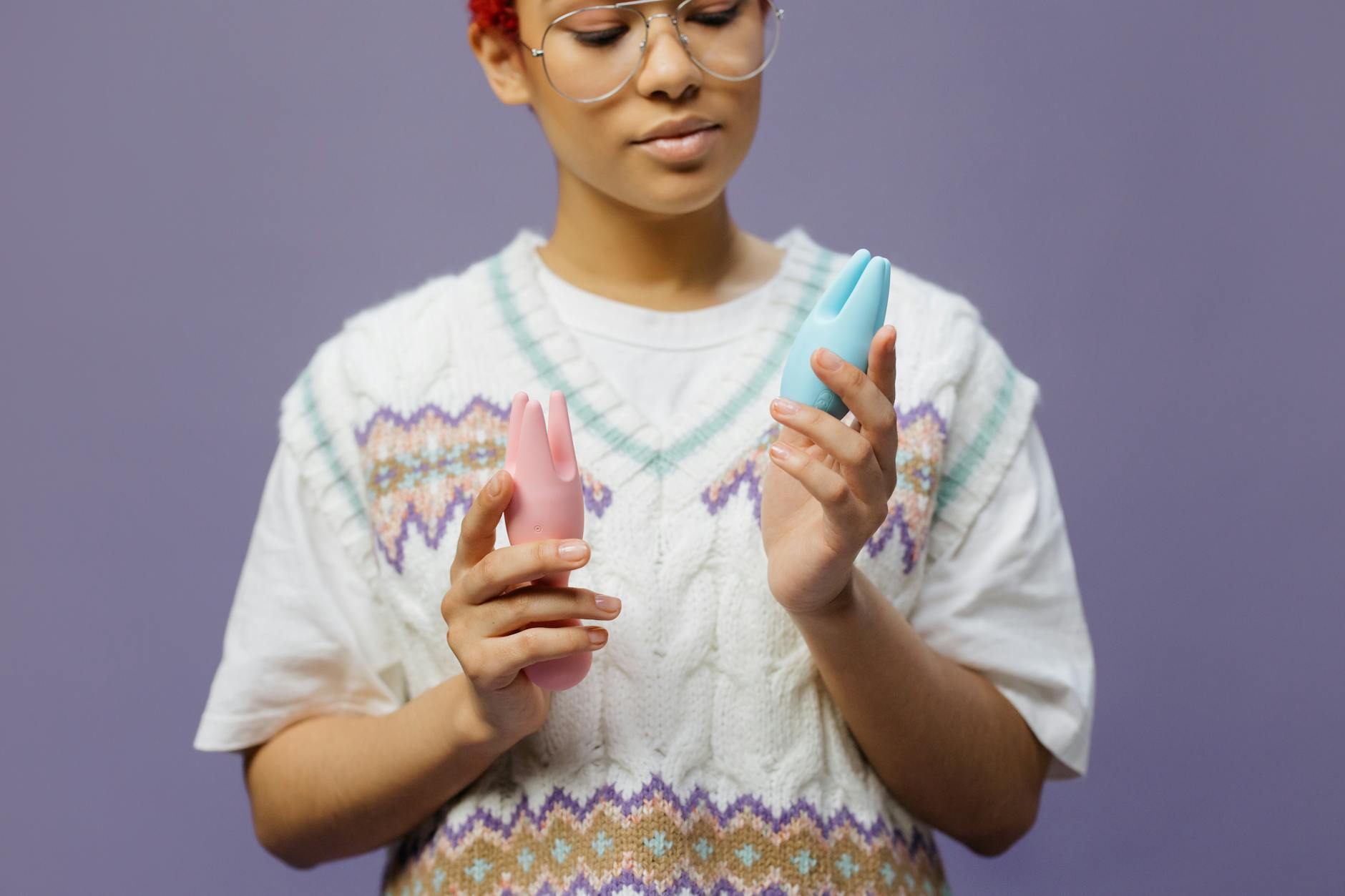
How to Use a Lemon Vibrator When Desire Feels One-Sided in Your Relationship
When one partner wants sex more than the other, solo pleasure becomes the bridge. Here's how to reclaim your body without resentment, shame, or pressure.
One of you wants sex. The other doesn't. Not always. Not never. Just less. And that gap. That gap turns into resentment, shame, and the slow erosion of affection because you're both wrong about what it means.
The partner who wants more sex feels rejected. The partner who wants less feels pressured. Both start avoiding touch entirely because safe touch feels impossible. Then you're not just mismatched on desire. You're disconnected.
Here's what I see in my practice: when couples stop treating the desire gap as a relationship problem and start treating it as a body problem, everything shifts. A lemon vibrator or other clitoral vibrator isn't a workaround. It's a tool for the person with higher desire to remember what pleasure feels like when it's not tangled up with rejection and negotiation.
Desire discrepancy is the most common complaint I hear. About 60 percent of couples report it at some point. But here's what gets missed. The partner with lower desire isn't broken. Neither is the partner with higher desire. Desire varies for biological, emotional, stress, and relationship reasons all at once.
Sometimes it's hormones. Sometimes it's that one partner is carrying more of the household load and their nervous system is fried. Sometimes it's that one person processes stress through sex and the other through withdrawal. Sometimes they have genuinely different baseline sex drives that have nothing to do with love.
The problem isn't the gap itself. The problem is what couples do when they notice it. They start performing sex. They start withholding affection as punishment. They make the gap mean something it doesn't. "You don't want me" becomes "You don't love me." Neither is true.
Solo pleasure with a lemon vibrator interrupts that spiral because it separates your pleasure from your partner's response. Your orgasm doesn't depend on negotiation. It doesn't require performance. It's just yours.
I recommend this to nearly every couple with a desire gap. The person with higher desire uses a lemon clitoral vibrator or similar toy regularly. Not as a substitute for partnered sex. As a way to metabolize their own body's needs without turning their partner into the bad guy.
Here's what happens. Your nervous system relaxes because you're not constantly scanning your partner for signs of willingness. Your body remembers what it feels like to be satisfied. You stop resenting your partner for not being available. And paradoxically, your partner often becomes more available because the pressure is gone.
The partner with lower desire benefits too. They don't feel chased. They don't feel like a dispenser of sex. They can slowly rebuild desire on their own timeline without performance anxiety crushing any natural arousal that might emerge.
A lemon vibrator is particularly good for this because the suction design doesn't require a partner. You don't need to explain technique or what feels good. You don't need to manage someone else's pace. You control everything.
This is the hard part. Because saying "I want to use a vibrator solo" can sound to your partner like "I'm giving up on us." It doesn't mean that. But the conversation matters.
Here's the frame that works: "I want to take care of my body's needs so I can show up better to you and our relationship. I want to reduce the pressure between us so we can eventually reconnect without resentment." That's true. Say it.
You can also be practical. "I'm going to do this a few times a week. It has nothing to do with how I feel about you. It's about my body feeling neglected and me needing an outlet that doesn't depend on negotiation." A lot of partners actually feel relieved when they hear this because it removes the burden of being the sole source of their partner's pleasure.
If your partner reacts badly, that's information. It might mean they're scared you're pulling away. It might mean they have shame around solo pleasure. Those are real conversations to have with a therapist. But the path forward isn't to stop taking care of yourself. The path forward is to understand what the resistance is about.
If your relationship is in a pressure cooker around sex, your first solo sessions might feel weird. Your nervous system might be hypervigilant. You might worry your partner can hear you or judge you. That's normal.
Start small. A lemon vibrator like the Lem is designed for ease and control. Begin with just five or ten minutes, low intensity, no pressure to finish. The goal is not to have the most intense orgasm of your life. The goal is to feel your body as a source of pleasure separate from your relationship.
You might use it a few times a week, or once a week. There's no schedule. But consistency helps because it tells your nervous system that your pleasure is a regular part of your life, not a secret or an emergency.
Use lube. Use it on yourself in privacy. Notice what patterns emerge. Do you fantasize more easily when you're alone? Do certain times of day feel better? Do you prefer certain patterns of stimulation? All of this information is gold because it teaches you about yourself, separate from your relationship's dynamic.
Water-based lubricant works best with silicone toys like a lemon clitoral vibrator. It feels natural, cleans easily, and won't degrade the toy. Keep it simple.
This happens. You use a lemon vibrator, you feel fantastic alone, and then you try to have sex with your partner and it all shuts down. That tells you something specific is happening in your body around your partner, not that you're broken.
It might be that you need more time before partnered sex feels safe again. It might be that you need your partner to understand what you've learned about your body so they can meet you there. It might be that you need to rebuild trust or affection first, and sex comes later.
The solo work is still the foundation because now you know pleasure is available to you. You know your body can respond. The block is specifically relational. That's something to explore with a couples therapist.
Don't rush back to partnered sex just because you think you should. Let your body tell you when it's ready. A vibrator has given you that permission.
Sometimes your partner will ask to be part of your solo pleasure practice. That's okay if you want it, and you don't have to if you don't. The boundary is yours.
If you do invite them, be clear about what this is. "I want you to be present while I use my vibrator, but I need you to just watch and be with me. I'm not expecting this to turn into sex." That removes the goal of partnered sex and makes it about connection and witnessing.
The watching itself can be intimate. Your partner gets to see you in pleasure. You get to feel held while you're vulnerable. But only if that feels safe to you. If it doesn't, solo is the way. And that's healthy too.
Here's what I notice over time. When both partners have their own pleasure practices, the quality of partnered sex often improves. Why. Because you're not desperate. You're not pressured. You show up because you want to, not because you feel obligated.
Your partner also starts to see you as a separate person with your own body and needs, not as someone who exists to fulfill theirs. That shift in perspective is huge. Suddenly sex is not about negotiation. It's about two people who enjoy each other coming together.
The desire gap doesn't always disappear. But it stops feeling like a wound. It becomes just a thing you navigate, like any other difference between partners. And you both have tools to take care of yourselves in the meantime.
No. Solo pleasure with a lemon vibrator or any toy is not infidelity. You're not with anyone else. You're not fantasizing about your neighbor instead of your partner. You're taking care of your body. That's called self-care. Infidelity involves betrayal and a third person. Vibrators don't.
They might feel that way initially if you don't frame it clearly. That's why the conversation matters. Solo pleasure isn't about your partner being insufficient. It's about reducing pressure so your relationship can actually improve. Many partners feel relieved once they understand that.
There's no set schedule. Some people use it a few times a week. Some use it daily. The goal is consistency, not frequency. What matters is that it's regular enough that your nervous system learns to trust that your pleasure will get attended to, with or without your partner.
Your solo practice doesn't directly heal their trauma, but it does reduce the pressure they feel. That can help them relax and work through their stuff at their own pace. If they have unprocessed trauma, they need a therapist. But your self-care doesn't interfere with that process. It supports it by getting their nervous system out of defensive mode.
That's a relationship issue worth exploring with a couples therapist. A partner who forbids you from touching your own body in private is enforcing control, and that's a pattern worth naming and addressing. Your body belongs to you. Your pleasure belongs to you. A partner's discomfort doesn't override that.
Often yes, because the pressure drops. But not always, and that's okay. Sometimes it clarifies that the desire gap is too wide to bridge, and that information is valuable. A vibrator helps you build a life where your pleasure isn't contingent on your partner's availability. What you do with that information is up to you.
When desire mismatches happen, most couples try to fix it through communication, scheduled sex, or trying harder. None of that works because the problem is that someone's body has learned to associate sex with pressure. A lemon vibrator interrupts that pattern by decoupling pleasure from performance.
You start to remember what your body wants when nobody's watching. You learn to trust your own arousal again. And then, slowly, you might be willing to show up differently with your partner. Not because you have to. Because you want to.
The desire gap probably won't disappear. But it can stop poisoning everything else. And that's when real intimacy can actually begin.