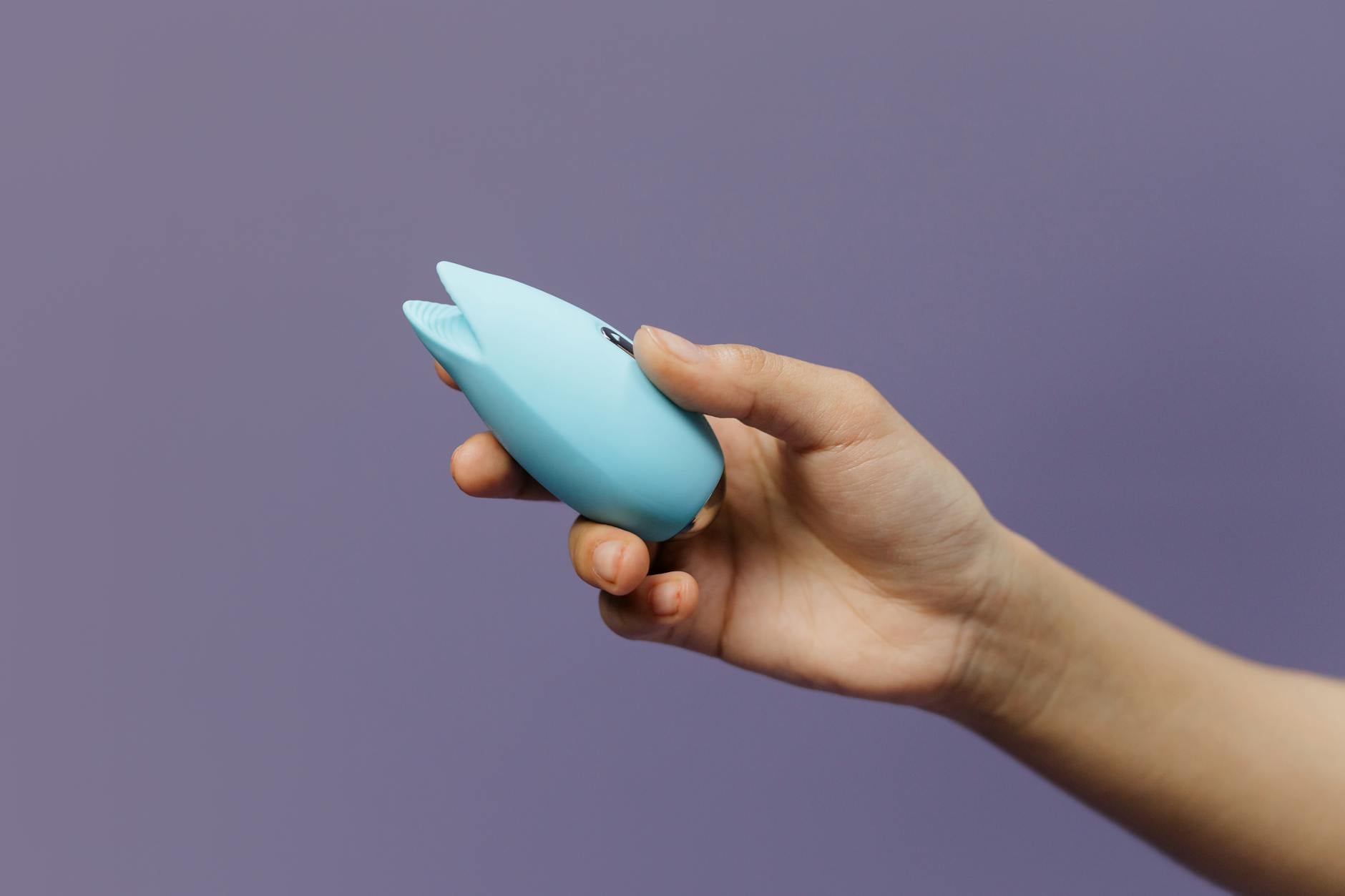
How to Use a Lemon Vibrator When You Feel Disconnected From Your Body
Dissociation, chronic stress, and grief can make you feel numb or distant from physical sensation. Here's how lemon clitoral vibrators rebuild embodiment, safely and slowly.
You're going through the motions. Eating, working, moving through the day. But there's a distance between you and your physical self. Your body feels like someone else's. This isn't uncommon, and it's not broken.
Body disconnection, or dissociation, happens after prolonged stress, grief, trauma, or even just years of pushing through without stopping. Your nervous system essentially says: too much input, I'm stepping back. The problem is, when you step back from sensation, you step back from all sensation. Pleasure included.
The good news is that reconnection is possible. And using a tool like a lemon vibrator can be genuinely helpful as part of that process, especially because it's designed to engage sensation directly without requiring the kind of mental arousal that feels impossible when you're disconnected.
When you're dissociated, your body still has nerve endings. Your clitoris still has the neural capacity for pleasure. But the signal from your body to your brain gets static. Touch feels muffled. Arousal doesn't build the way it used to. Orgasms might feel distant or unfamiliar even when they happen.
This is NOT a problem with your clitoris. It's a nervous system state issue. Your brain has temporarily deprioritized sensation as a survival strategy. Reconnecting means gently reminding your nervous system that sensation is safe and worth paying attention to again.
Lemon sucker vibrators, especially the air-suction design, are unusually good at this because they work via suction rather than vibration alone. Suction feels like a gentle, sustained pressure that builds sensation slowly. You're not asking your brain to register rapid oscillation from the start. You're offering it a clear, singular sensation to focus on.
Three reasons this specific tool helps with disconnection:
1. Sensation without demand. Unlike vibration patterns that require active engagement, suction is passive. You're not performing anything. You're just allowing sensation to happen.
2. Embodiment anchor. Pleasure is one of the few sensations that naturally pulls your attention into your body. A lemon vibrator creates that anchor without the emotional labor of partnered sex or the expectations that come with it.
3. Nervous system reset. Gentle, repetitive sensation signals safety to your parasympathetic nervous system. Over time, your body relearns that pleasure is a safe signal worth attending to.
If you're using a lemon clitoral vibrator to reconnect after dissociation, pacing matters. You're not chasing an orgasm. You're rebuilding a conversation between your brain and your body.
Start with the lowest intensity. On the Lem, this is pattern one or two. Set a timer for five minutes. Your only job is to notice sensation without judgment. Is it tingly? Warm? Electric? Pressured? Don't chase any particular feeling. Just observe.
Do this three or four times a week for a week. Don't pressure yourself toward orgasm. Many people in deep dissociation find that orgasms feel further away than sensation, and that's okay. You're rebuilding baseline awareness first.
After a week, if you're ready, try extending to ten minutes. Move up one intensity level. Again, notice. No goals. No pressure. This is about rewiring your nervous system's trust in sensation, not about performance.
Honestly, reconnection after dissociation is nonlinear. Some sessions you'll feel a lot. Others you'll feel almost nothing, even with the same intensity and time invested. This isn't failure. This is normal nervous system behavior. You're retraining sensitivity, and that happens in starts and stops.
Many people report that it takes three to four weeks of consistent, low-pressure use before pleasure starts to feel familiar again. Some feel shifts within days. Dissociation severity varies wildly, so your timeline is yours.
One note: if you start to feel more anxious or panicked during use, pause. Reconnection work is gentle. It shouldn't feel alarming. If something does, talk to a therapist who specializes in dissociation or somatic work. Lemon vibrators are a helpful tool, not a replacement for professional support if you need it.
If you're rebuilding embodiment in a relationship, communication is essential. Tell your partner: "I'm working on reconnecting with sensation. I need solo time with this, and it's not about you." Most partners appreciate clarity. It removes the awkwardness and actually makes space for greater intimacy later.
Once you've rebuilt some baseline sensation on your own, partnered exploration can help too. But start there first. Solo reconnection is less complicated. There's no performance pressure, no one else's arousal to track. You can focus entirely on your own nervous system.
Lemon clitoral vibrators work best as part of a broader embodiment practice, not as a standalone fix. Things that help alongside vibrator use:
Body scans. Before using your lemon vibrator, spend five minutes noticing sensation across your body without touching anything. Toes, legs, belly, chest. Just notice. This primes your nervous system to pay attention to sensation.
Temperature play. Take a warm shower or bath first. Heat naturally increases sensation and signals safety to your nervous system.
Breath awareness. During use, focus on your breath. Slow, deep breathing keeps you in parasympathetic mode, which is the state where reconnection actually happens.
Journaling. After sessions, spend three minutes writing down what you noticed. Tingling? Pressure? Numbness? Anxiety? All of it is data. Over time, you'll see patterns in what your body is learning.
The lemon vibrator is the tool. These practices are the context that makes the tool work.
If dissociation is severe, or if you've experienced trauma, a somatic therapist or trauma-informed counselor can be genuinely valuable. They can help your nervous system process what's underneath the disconnection. Vibrators help rebuild sensation. Therapy helps rebuild safety.
Some people find that once they've started reconnecting with lemon adult toys and embodiment work, they want to explore further partnered intimacy. That's wonderful. Some people find that solo reconnection is enough. Both are valid.
The goal isn't orgasm. It's trust. Trust that your body is yours. Trust that sensation is safe. Trust that pleasure is worth your attention. Everything else follows from there.
It depends on dissociation depth and duration. Many people feel shifts in baseline sensation within two to three weeks of consistent use. Full reconnection typically takes four to eight weeks. Some people take longer. There's no standard timeline. Consistency matters more than intensity.
Yes, absolutely. Many SSRIs reduce sensation, but lemon clitoral vibrators are actually effective for people on these medications precisely because the suction mechanism is more capable of cutting through numbness than traditional vibration. Start low, be patient, and adjust intensity gradually. If you have specific concerns, ask your prescriber.
This can happen, particularly in early sessions. It doesn't mean vibrators are wrong for you. It means you might benefit from a slower pace. Try shorter sessions (two to three minutes instead of five). Use even lower intensity. Or pause and do some of the other embodiment practices first before introducing vibrator use again. Your nervous system is learning.
Completely normal. In fact, pressure to orgasm often interferes with reconnection work. You're not trying to achieve anything. You're practicing sensation awareness. Orgasms will return. Sensation comes first.
If you have a partner you're intimate with, yes. You don't need to overshare every detail, but simple honesty helps. "I'm doing some work to reconnect with my body. I'll be using some tools solo for a bit." Most partners appreciate the transparency and actually feel relieved to understand what's happening.
Yes, but carefully. Dissociation and pelvic floor tension often go together. Before using a lemon vibrator, you might benefit from pelvic floor relaxation work. A physical therapist who specializes in pelvic health can help. Once your pelvic floor is less tense, lemon clitoral vibrator use becomes more comfortable and effective.
Reconnecting with your body after dissociation is not about forcing pleasure. It's about creating conditions where sensation can return safely and slowly. A lemon vibrator is a tool that helps that happen. But the tool only works if you're willing to be patient with yourself, to show up consistently, and to let your nervous system move at its own pace.
Your body knows how to feel pleasure again. Sometimes it just needs permission, time, and a little help getting started. Everything else follows.
If you're struggling to reconnect on your own, reach out. A therapist, a doctor, or a trusted friend can help you find the right pace. You're not alone in this.