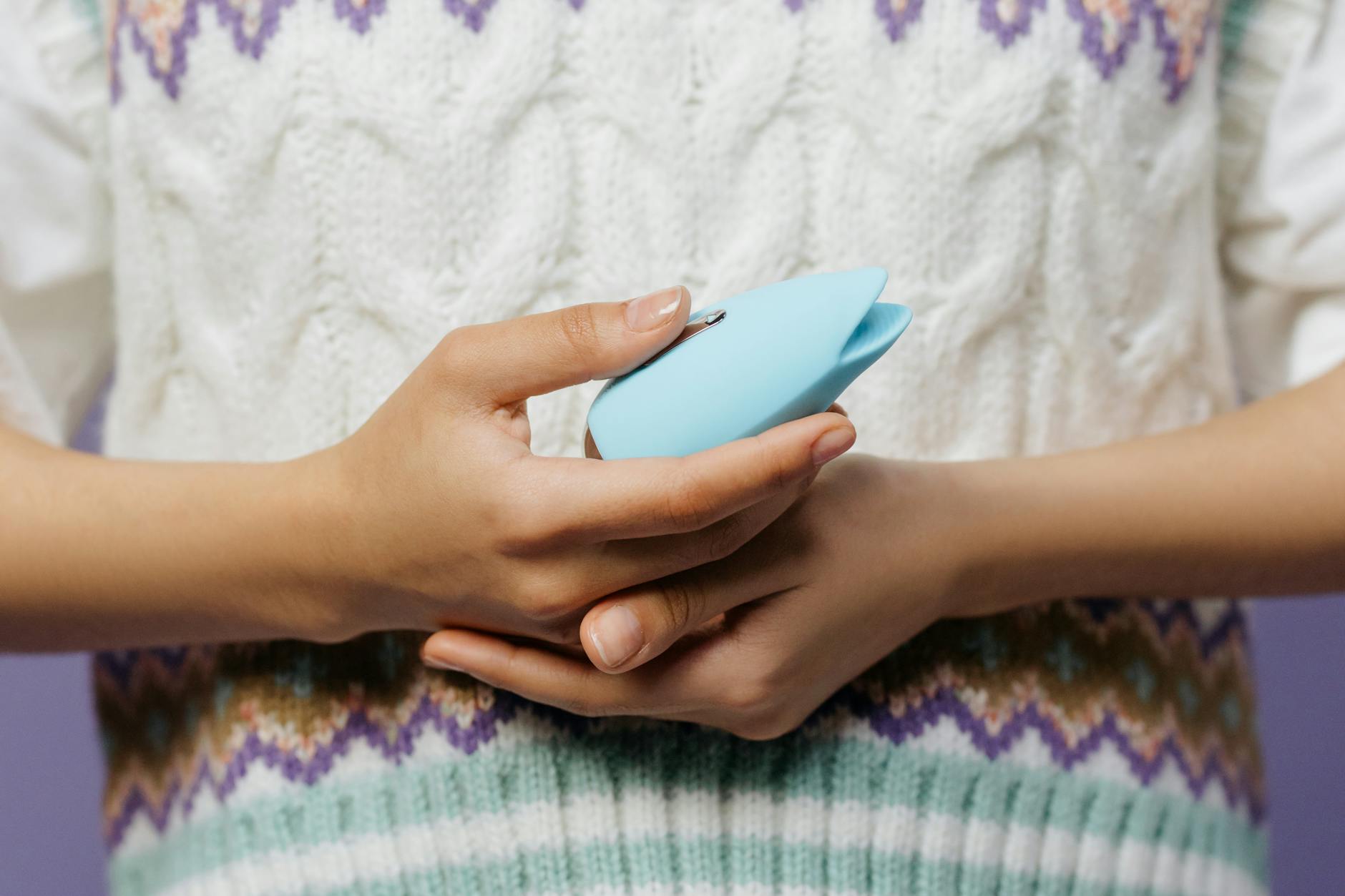
How to Use a Lemon Vibrator When You Struggle With Sensation Consistency
Your body isn't broken when pleasure feels different day to day. Here's what actually causes sensation fluctuations and how a lemon clitoral vibrator fits into the picture.
You use your lemon vibrator and it's incredible. Three days later, same toy, same patterns, same amount of time carved out. Nothing. Or worse, it feels uncomfortably intense when last week it was perfect. Your first thought is usually: something's wrong with me. Actually, something's working exactly as it should. Your nervous system isn't a light switch. It's a dimmer that moves based on hormones, stress, sleep, attention, and a dozen other variables that shift constantly.
This is so common I'd estimate I hear about it from at least 70 percent of people who start exploring pleasure with intention. The frustration is real. But once you understand what's actually happening, you can work with your body instead of against it.
If you menstruate, your cycle is the biggest driver of sensation variability. The days right after your period ends, when estrogen rises, your clitoral tissues swell slightly and blood flow increases. Sensation is typically sharper, responsiveness is quicker, and the lemon vibrator's suction might feel almost too intense if you're not careful with the intensity settings.
Then comes ovulation. This is often peak sensitivity for many people. This is when sensation feels effortless, orgasms come faster, and the lemon vibrator barely needs to work.
After ovulation, as progesterone climbs, sensitivity often flattens. Not in a bad way. Just different. It takes longer to warm up, and sensation might feel duller. Some people actually prefer this phase because it's less intense and feels more sustainable.
The luteal phase (the week before menstruation) is wildly variable. Some people experience heightened sensation again as hormones drop. Others go completely numb. Stress amplifies whatever your baseline is during this window.
If you don't menstruate, your sensation still fluctuates. Testosterone cycles, cortisol changes with stress, and sleep quality all reshape your nervous system's responsiveness. You won't have the same monthly rhythm, but you'll still notice patterns.
I have a client who came to me frustrated because her lemon vibrator worked beautifully on weekends but felt pointless on weeknights after work. She assumed something was mechanically wrong. Then we tracked it: on work nights, she was still mentally cycling through her to-do list. Her nervous system was in sympathetic activation (fight-or-flight territory). Her body literally couldn't access pleasure.
This is neurobiology, not a character flaw. When your nervous system is threat-detecting, blood flow diverts away from the genitals and toward your muscles and brain. Sensation becomes muted. Even a lemon vibrator's gentle suction can feel irritating instead of pleasurable when you're in that state.
Do a quick check: are you rushing? Are you checking your phone? Is there a part of your attention still at work or worried about something? If yes, you're likely sympathetic-dominant. Your body is in protect mode, not pleasure mode.
This one doesn't get enough airtime. Sleep deprivation doesn't just make you tired. It raises cortisol, dysregulates dopamine, and makes your nervous system hypersensitive to threat. That hypersensitivity paradoxically makes pleasure harder to access. Everything feels like too much or not enough.
I notice this most acutely in clients dealing with young children or irregular schedules. The lemon vibrator used to work beautifully. Now it feels pointless or overwhelming. Often the difference is three solid nights of sleep away.
If you're chronically sleep-deprived, expecting consistent sensation is like expecting a phone with a dying battery to run at full speed. Address the sleep first. Pleasure will be waiting.
Here's something counterintuitive: your lemon vibrator will feel radically different depending on where your attention is. If you're present and focused on sensation, your brain literally processes it more intensely. The suction feels stronger, orgasms are more defined, and the whole experience has texture.
If you're distracted, checking the time, or doing this because you think you should, your brain downregulates the signal. The vibrator becomes background noise.
This is why rushing doesn't work. It's why having your phone visible doesn't work. It's not willpower or focus in the spiritual sense. It's straightforward neurobiology. Your brain can't simultaneously run a threat-detection scan and register pleasure. One system dominates.
Carve out actual time. Not stolen minutes. Real time where you're not waiting for the next thing. This alone transforms consistency.
If you've started a new medication and sensation shifted, that's worth mentioning to your doctor. Sometimes the timing of the dose helps. Sometimes there's an alternative. Sometimes you need to adjust your lemon vibrator strategy (lower intensity settings, more time, more focus on arousal first).
Don't assume the medication is permanently disabling your pleasure. Often it's a recalibration, not a shutdown.
Chronic pelvic floor tension is rampant, especially in people who stress, sit a lot, or have a history of pain or trauma. When your pelvic floor is held tight, sensation gets blocked. A lemon vibrator might feel frustrating or too intense instead of pleasurable.
You can have pelvic floor tension and not realize it. It feels normal to you because you've been living in it. A pelvic floor physical therapist can assess this in one session. The treatment is usually just learning to release and relax the muscles. That alone can unlock sensation.
Track what changes. For one month, jot down how sensation felt and note: day of cycle (if applicable), how much sleep you got, stress level on a scale of 1-10, and what you ate that day. You'll spot patterns. Maybe sensation is reliably better after 8 hours of sleep and worse after a stressful day. This gives you something to work with.
Match intensity to your state. On high-stress days or when you're tired, start on pattern 1 or 2 on your lemon vibrator. Don't assume you need the same intensity every time. Your body isn't constant; your settings shouldn't be either.
Build in a real warm-up. Even 15 minutes of kissing, touching, or fantasizing before you bring the lemon vibrator into the mix shifts your nervous system. Your body needs time to transition from daily life into pleasure mode.
Reduce distractions ruthlessly. Phone in another room. Door locked. No time pressure. This is non-negotiable if you're struggling with consistency.
Stay hydrated and well-fed. Dehydration and blood sugar crashes kill sensation. This matters.
Most fluctuation is normal. But if sensation has completely disappeared for months, or if pain appeared alongside the flatness, check in with a healthcare provider. Sometimes inconsistency is a signal of hormonal shifts, medication effects, relationship stress, or something physical that deserves attention.
Otherwise, inconsistency is your body doing its job. Your nervous system is responsive. It's not stuck. Some days your lemon vibrator will be magical. Other days it'll be fine or just okay. That variability is actually a sign your body is working.
Your nervous system follows a circadian rhythm. Cortisol peaks in the morning and dips in the evening. You typically have the most ease with pleasure in the afternoon or early evening when cortisol is moderate. Plus, you're usually less cognitively occupied. Morning pleasure often requires more deliberate focus.
Yes. Prioritize sleep, reduce stress when possible, build in real warm-up time, eliminate distractions, and track patterns so you understand your body's actual rhythm. Work with your body instead of forcing a false consistency.
Completely normal. This usually points to nervous system state or hormonal timing. It's not the toy. It's your body's responsiveness shifting. Once you understand the pattern, you can adjust accordingly.
Yes, absolutely. Caffeine raises cortisol and can make your nervous system more reactive. High caffeine intake right before pleasure sessions might make sensation feel scattered or too intense. Many people find limiting caffeine in the afternoon helps.
This is worth exploring with a therapist or healthcare provider. Chronic stress can reshape your nervous system's baseline. But it's also reversible. Rest, nervous system regulation practices, and sometimes therapy can help sensation return.
If inconsistency is occasional and tied to identifiable factors (stress, hormones, sleep), you're probably fine. If it's chronic and accompanied by pain, numbness, or serious relationship distress, yes, it's worth a conversation with a healthcare provider.