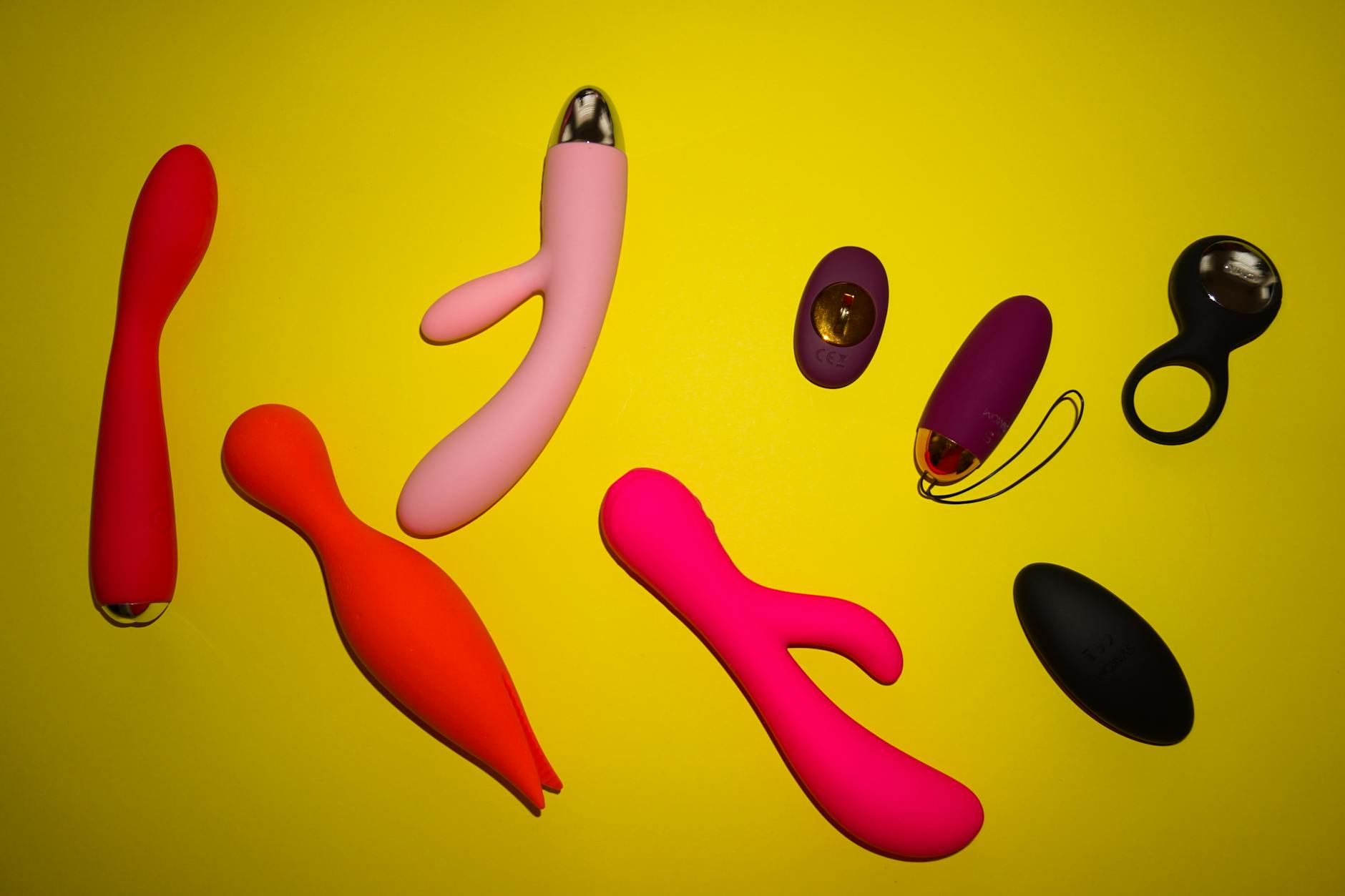
The conversation feels like it should be awkward. It doesn't have to be. Here's exactly how to introduce a clitoral vibrator, talk through it, and actually enjoy the experience together.
Introducing a lemon vibrator or any clitoral vibrator to a new partner feels like it should come loaded with tension. The truth? It doesn't. Most of the discomfort lives in your head, not in the actual conversation.
I've worked with hundreds of couples navigating this exact moment. The people who handle it best aren't the ones with the most experience. They're the ones who talk about it like adults instead of treating it like a confession.
There's a difference between bringing this up on a third date and bringing it up after three months of intimacy. Neither is wrong, but context changes everything.
If you're early in dating, naming what you like early actually builds trust faster. You're saying: I know what I want, I'm comfortable with myself, and I expect you to be cool with it. Partners who are worth keeping like this. The ones who aren't? You've dodged a bullet.
If you're a few months in, you have the advantage of physical history. You've already found rhythm together. Introducing a tool feels like an upgrade to something that's already working, not a flag that something's broken.
The worst timing? Bringing it up in the middle of sex when things aren't going according to plan. That reads as blame. Avoid that.
Here's the script I give my clients, adapted for your situation:
Pick a calm moment outside the bedroom. Not after sex. Not during. Couch, coffee, car ride. Somewhere ordinary.
Start with something true about yourself, not about them: "I've been thinking about things that really help me feel good, and there's something I want to try with you."
Notice what that does. It puts the focus on your pleasure, your body, your wants. It's not a request or a negotiation. It's a thing you're interested in.
Name the tool and why it works for you: "I have a clitoral vibrator called a Lemon. It's basically a suction toy that works really differently than hands or fingers alone. I find that I feel more, faster, and honestly more consistently."
Again, facts. Not euphemisms. Not apology. You're explaining equipment, like you might explain a running watch or a coffee maker.
Then: here's the important part: "I want to use it with you because I want you there when I feel that good."
That sentence changes the whole dynamic. You're not saying he's not enough. You're saying you want to share something that makes you feel amazing with someone you like.
Expect one of three responses:
"Yeah, let's try it." Easiest path. Move forward.
"I don't know. I feel weird about it." Legitimate. Ask what the weirdness is. Often it's: "Will you still want me?" or "Does that mean I'm not enough?" Address that directly. "No. It means I want you here watching me feel incredible."
"No, I'm not into that." That's a real incompatibility. You get to decide if that's a dealbreaker. It is for some people. That's okay.
Don't make it a whole production. No scented candles or costume changes. Just normal intimacy with one addition.
Start with the toy in the room but not in use yet. You can hold it, show him how it feels in your hand (it's small, smooth, nothing scary), explain the intensity settings. Let curiosity replace anxiety.
Your pleasure comes first, always. This isn't a dual experience. You're using a tool on your body. His role is present, engaged, and watching. That's actually incredibly hot for most partners once they relax into it.
Tell him what to expect from you. "I might get really quiet. I might make sounds. I might move. None of that is about you." Remove the guessing game. He doesn't have to worry he's doing something wrong. He's just there.
Start on a lower intensity. The Lemon has multiple settings for a reason. If you usually use it alone on setting 3, start at setting 1 or 2 with him there. Your nervous system might respond differently with another person watching. That's normal.
Let him be involved in ways that feel good. Some partners want to hold the toy. Some want to kiss you while you use it. Some just want to watch and touch other parts of your body. Ask what feels right for him, then tell him what feels right for you.
Most partners, once the initial weirdness passes, become genuinely invested in your pleasure. Not in a performative way. In an "oh wow, she actually gets to feel that" kind of way. That's when things shift from awkward to intimate.
I've had couples tell me that introducing a lemon vibrator into their sex life was the moment things actually got easier to talk about. Suddenly communication wasn't theoretical. It was practical. "Can you angle it like this?" becomes a normal sentence between you.
Your pleasure doesn't diminish his role. It actually often deepens connection. He gets to see what works for you. You get to relax instead of performing. That's something to build on.
Don't skip this. It takes two minutes and prevents weeks of weirdness later.
The next day or that evening, just check in. "How did that feel for you?" Not interrogating. Genuinely curious. He might say he felt weird at first but liked watching you. He might say he wants to do it again. He might want to wait a while. All of that is useful information.
If it felt good, you can also say "I really liked having you there for that." State it directly. Don't assume he knows. People catastrophize in silence.
Here are the objections I hear most often, and the truth behind them:
"Does this mean I'm not enough?" Translation: Will you still want me? Answer: "No, it means I'm comfortable being myself around you."
"Will you always need this now?" Translation: Are things going to get more complicated? Answer: "I might want it sometimes. I might not want it other times. It depends on what I'm feeling."
"Isn't that something you should only do alone?" Translation: Feels too intimate to witness. Answer: "I want you to know what makes me feel good. That's the whole point."
None of these require you to defend yourself. You're stating a boundary and a preference, not asking permission.
Sometimes a partner won't come around. Sometimes he'll agree to try and then withdraw, or get resentful, or act uncomfortable. That's information too.
You get to use a tool that makes you feel good. You get to have pleasure. If someone can't be cool with that, that's a compatibility thing, not a you thing. Don't minimize yourself to make someone else comfortable with your body.
If the conversation flopped or the first time was tense, you don't have to abandon the idea. But you also don't have to push.
A few weeks later, if you've moved past it and things feel good between you, you can say: "I want to try that thing again. I think we both got in our own heads last time." Sometimes people need permission to be cool about it retroactively.
But if he's made it clear he's not interested, respect that and decide if it's a dealbreaker. This isn't a compromise situation. Your pleasure matters. His comfort matters. Those have to align or the relationship stays surface-level.
Once you've done this once and it went okay, something changes. You've shown him you know what you want. You've let him see you feel good. You've made pleasure a thing you talk about instead of a thing you hide.
That's when you might feel comfortable asking about his body, what he likes, what he's been too shy to say. You've created a model where vulnerability is safe. That's actually rare.
Frame it as about your body and your wants, not about his performance. "I found something that really works for my body" is different from "I'm not satisfied with what we're doing." The first is informational. The second is critical. Make sure you're doing the first one.
You can absolutely say yes to him being in the room and no to him controlling the toy. "I want to show you how I use it first" buys you time to see how you feel. Control matters. Don't give it up just to avoid an awkward conversation.
No. Your solo pleasure is your business. You don't owe him a history of your body or your toys. You're just inviting him into something you already know you like. That's actually confident, not secretive.
You get to decide. Some people love that dynamic. Some people want variety. "I want this sometimes, but I also want other kinds of intimacy" is a completely reasonable boundary. Relationships aren't one-note.
Some people find their bodies respond differently with an audience. You might take longer to orgasm. You might feel more intensely. Both are normal. If it happens, you can say "I need a minute to get there, that's cool" and keep going. No performance pressure.
That's his work to do, not yours. Your body responding quickly to something that works for it is not an insult to him. If he takes that personally, that's something to address in a bigger conversation about what he thinks sex "should" be.
Introducing a clitoral vibrator to a new partner is not a referendum on the relationship. It's just information. You like this, your body responds to this, and you want to share that with someone. Partners who get that are partners worth keeping. The conversation is easier than the anxiety about the conversation. That's always how it works.