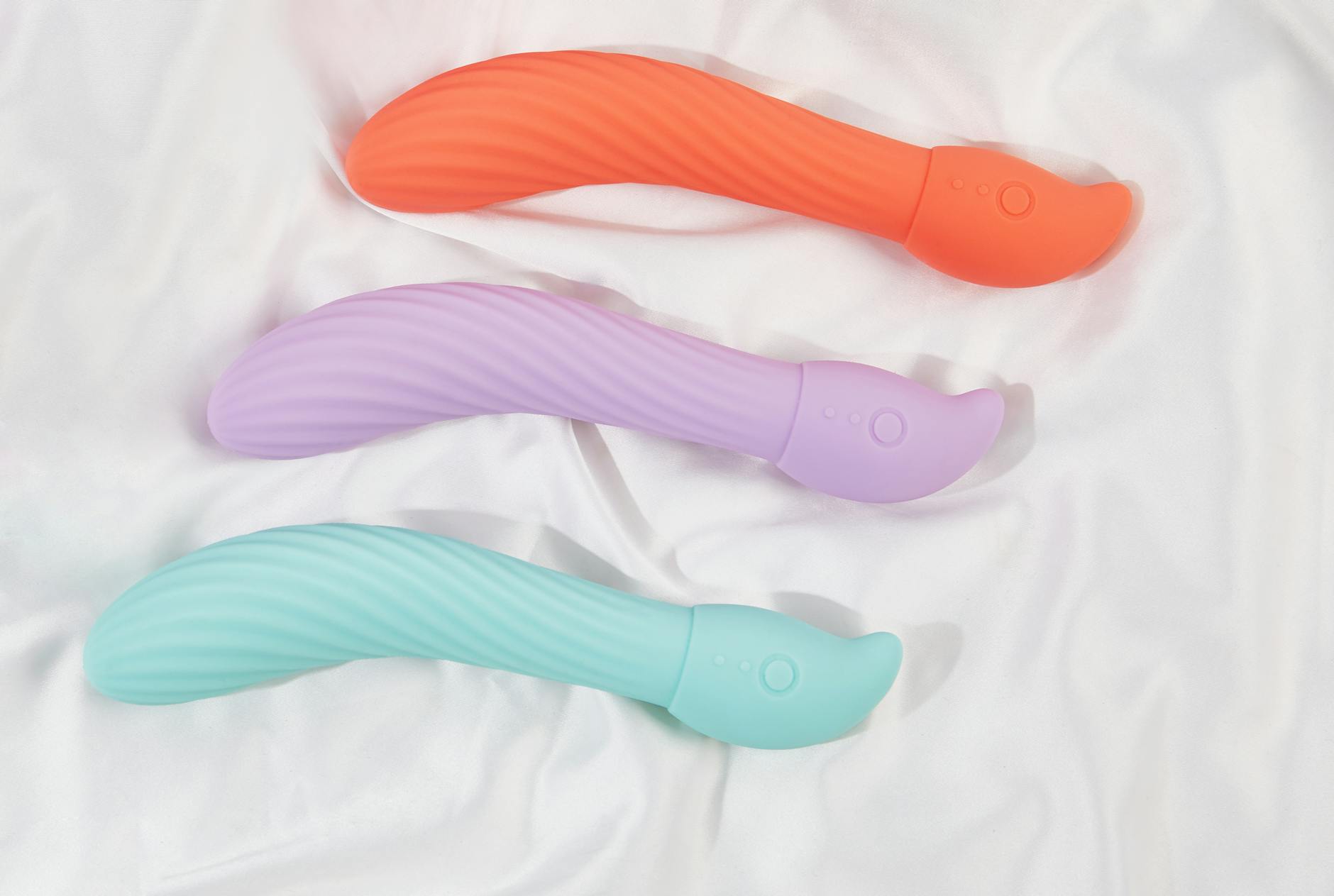
How to Rebuild Lemon Vibrator Pleasure When SSRIs Affect Sexual Response
Your antidepressant is working on your brain. Here's why that flat feeling during sex isn't permanent, and how a lemon clitoral vibrator can help you find sensation again.
Selective serotonin reuptake inhibitors work. They quiet the anxiety, lift the fog, make morning possible. They also make orgasm harder. For a lot of people, they make it feel like it might be impossible.
That flatness during sex, the sensation that's muffled like you're experiencing pleasure through a pane of glass, isn't a personal failure. It's not a sign your medication is wrong. It's how these drugs work in your nervous system, and it's completely reversible.
SSRIs increase serotonin availability in your brain by blocking its reabsorption. That's brilliant for mood regulation. But the same mechanism that steadies your emotions also dampens your arousal signaling and delays orgasm.
Here's the chain of events. Serotonin is an inhibitor in the sexual response pathway. Higher serotonin means lower sexual activation. Your clitoris might still engorge during arousal, but the signal strength from your nervous system to your tissues gets quieter. Stimulation that used to feel electric now feels muted. Orgasm takes longer, feels less intense, or doesn't arrive at all.
This isn't universal. Maybe 40 to 60 percent of people on SSRIs experience sexual side effects. But if you're reading this, you probably landed in that percentage.
Most vibrators apply vibration evenly across a broad surface area. That's fine for baseline sensation. But when your nervous system is running on dampened signal strength, you need focused, precise stimulation that penetrates through that serotonin fog.
Lemon clitoral vibrators use air-suction technology. Instead of vibration alone, they create a gentle vacuum and release cycle that stimulates the full clitoral complex, not just the surface. This matters because air-suction generates a different nerve response than standard vibration. It's deeper, more comprehensive, and it tends to cut through numbing more effectively.
In my work with clients, people on SSRIs report that a lemon vibrator creates sensation where other toys feel flat. The suction mechanism activates a broader network of nerve endings in ways that surface-level vibration sometimes can't match.
If you've been on an SSRI for months and sexual sensation has dimmed, your body needs a gentle reintroduction to pleasure. This isn't about pushing harder. It's about rewiring.
Start with external exploration only. No internal stimulation, no performance pressure. Set aside 20 to 30 minutes when you're not tired and have genuine privacy. Lie down, no rush.
Begin with the lowest setting on your lemon vibrator. Yes, the very lowest. Let the air-suction mechanism work on your outer labia and clitoral hood for several minutes without moving toward orgasm. The goal here is to wake up sensation, not chase climax. You're teaching your nervous system that pleasure is available again.
Over the course of a week or two, gradually move to slightly higher intensity settings. Notice where you feel sensation first. It might be sharper around the sides of your clitoris. It might take longer to feel anything at all. This is normal. You're building signal strength.
If you're with a partner, they need to know what's happening in your nervous system, not just that sex feels different. Many partners assume numbness means loss of interest. It doesn't.
Tell them this: "My medication is working on my brain chemistry. It's making sensation feel muted for now. I'm working through this. I still want intimacy with you, but I need time and a different approach."
Then agree on boundaries. Maybe that means partnered exploration with your lemon vibrator is off the table for now while you rebuild sensation solo. Maybe it means they're present but not involved for a few weeks. Maybe you want to reframe sex as something slower and more intentional than before.
The worst approach is silence. Partners fill silence with their own stories, usually ones where you've gone cold on them. Clear information prevents that spiral.
Some SSRIs cause more sexual side effects than others. Paroxetine and fluoxetine are notorious. Sertraline and escitalopram are gentler on sexual function for many people. If your SSRI was chosen without considering sexual side effects, ask your prescriber if switching is worth exploring.
You might also ask about timing. Taking your dose in the evening instead of morning sometimes reduces midday numbness. Some people do well with a dose reduction if their symptoms have stabilized. Others add bupropion, which counteracts sexual side effects in some cases.
Important: don't change your dose or timing without explicit guidance from your prescriber. But do raise the conversation. Sexual function isn't a vanity issue. It's central to wellbeing and relationship health. Any competent clinician will take this seriously.
If you're newly on an SSRI, sexual side effects usually peak around week four and sometimes improve slightly on their own by month three. But for many people, they persist as long as you're on the medication.
Rebounding sensation after you've adjusted to the flatness takes time. With dedicated exploration using a lemon clitoral vibrator and patience, people usually report noticeable shifts in sensation within two to four weeks of consistent practice. Orgasm capacity often takes longer. Some people recover full intensity over months. Others find a new normal that's slightly different but entirely satisfying.
Don't rush this. The brain learns through repetition, and sexual response is especially sensitive to performance anxiety. The more you chase sensation, the more it hides. The more you approach exploration as curious play, the faster it comes back.
SSRIs explain a lot. But if sensation stayed flat even before medication, or if numbness is getting worse over time rather than stable, there's something else happening. Sometimes it's stress. Sometimes it's relationship dynamics. Sometimes it's both.
This is worth exploring with a therapist who specializes in sexual health and has training in how medication affects intimacy. The overlap between antidepressant effects, anxiety patterns, and relationship patterns is complex, and a trained eye helps untangle it.
Your medication is keeping you alive and functional. Some reduction in sexual sensation is a real cost, not an imaginary one. But it's not permanent, and it's not the end of pleasure. Thousands of people have rebuilt robust, satisfying sexual lives while staying on SSRIs.
A lemon vibrator is a tool in that process. It's not magic. But its specific mechanics do cut through serotonin-related numbness more effectively than many standard toys. Combined with patience, the right information, and honest conversations with your partner and prescriber, you get your pleasure back. Not the same version you had before. Often something richer, more intentional, and harder-won. Worth it.
Sexual side effects can appear within days of starting an SSRI and usually stabilize by week four. Some people notice slight natural improvement by month three, but many experience persistent numbness as long as they're on the medication. Rebuilding sensation through deliberate exploration with tools like a lemon clitoral vibrator typically shows progress within two to four weeks of consistent practice, though full orgasm capacity sometimes takes longer.
Yes, sometimes. Paroxetine and fluoxetine are more likely to cause sexual numbness than escitalopram or sertraline. But switching medications requires discussion with your prescriber and isn't always the right move if your current dose is working well for mood stability. Some people do better with dose timing adjustments, slight reductions, or adding medications like bupropion that counter sexual side effects. Always involve your doctor in this conversation.
For many people, yes. Air-suction generates a different type of nerve stimulation than surface vibration, creating deeper and more comprehensive sensation. In clinical practice, clients on SSRIs report that lemon clitoral vibrators activate sensation in ways standard vibrators sometimes don't. This isn't universal, but it's common enough to be worth trying if regular vibrators feel flat.
Completely normal. SSRIs delay and often reduce orgasm intensity by increasing serotonin, which inhibits sexual activation. Some people lose the ability to orgasm entirely. This is a known side effect, not a sign of dysfunction. You're not broken. Your nervous system is responding exactly as expected to the medication. Rebuilding takes patience and often requires trying new approaches to stimulation.
Tell them. Silence creates stories, and those stories are usually that you've lost interest in them. Clear information prevents resentment and opens space for collaboration. You might say something like: "My medication dampens sensation, and it's taking time to work through that. I still want closeness with you, and I need us to approach this differently for now." Most partners are relieved to have an explanation and a way to help.
Absolutely no interaction. The lemon clitoral vibrator is external technology that doesn't interact with any medication. It's simply a tool to help generate and focus sensation when your nervous system is dampened. You can use it safely alongside any antidepressant.
You didn't lose pleasure. Your nervous system shifted. Understanding what SSRIs do, why sensation feels muted, and how to deliberately rebuild arousal and orgasm is the path back. It takes time, patience, and often a different set of tools. A lemon vibrator is one of them. Your prescriber's support is another. Clear conversations with your partner matter too. Combined, they work. Your pleasure is worth this effort.