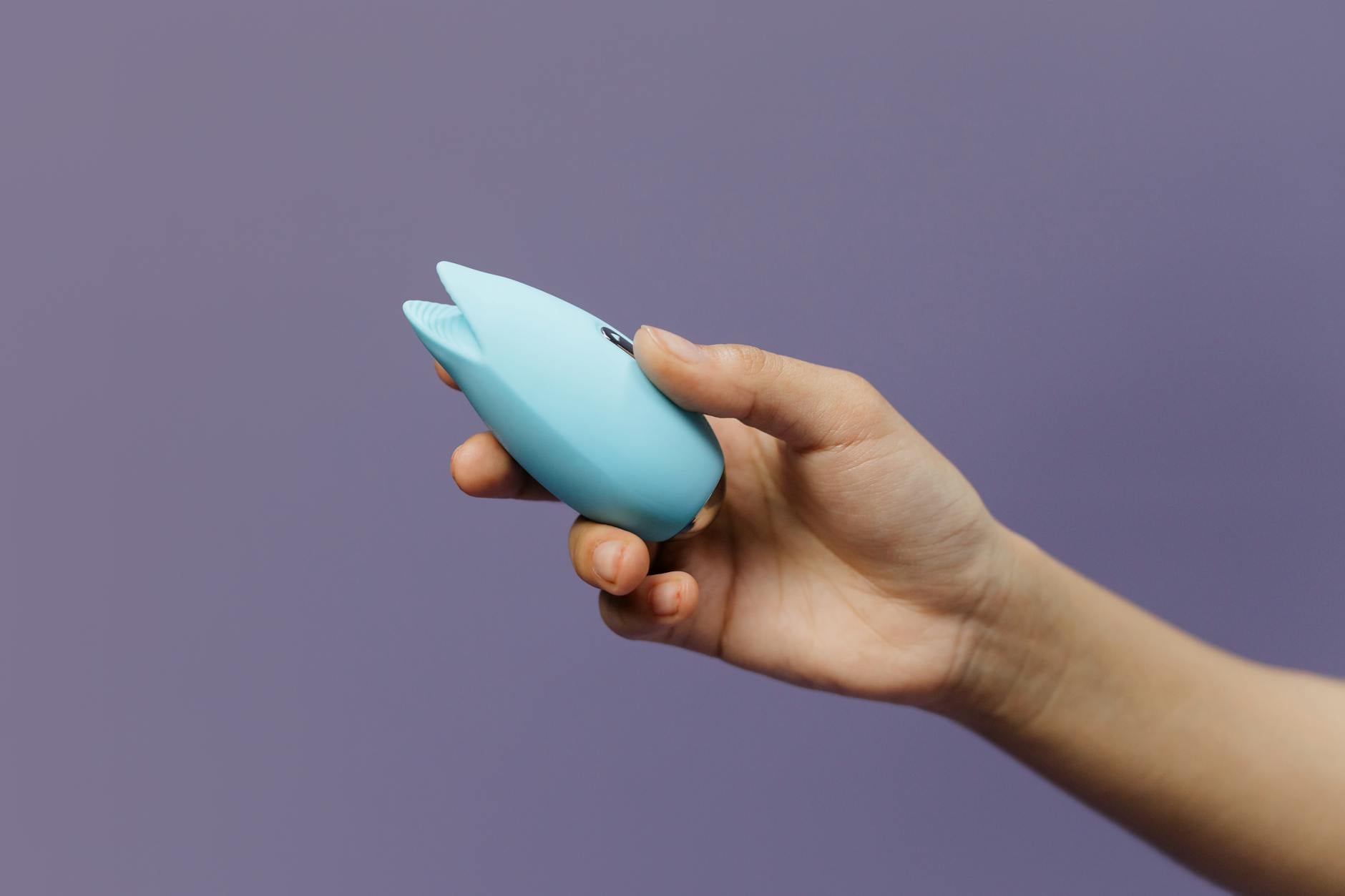
How to Talk to Your Partner About Using a Lemon Vibrator Together
The conversation you're dreading is probably easier than you think. Here's exactly what to say, when to say it, and why this talk might be the best thing that happens to your sex life.
You want to bring a lemon vibrator into sex with your partner, and you're convinced the conversation will go sideways. That they'll feel inadequate. That you'll sound greedy. That it's somehow admitting your sex life isn't good enough.
Here's the thing: that story you're telling yourself is almost always fiction. Most partners don't hear "I want to use a clitoral vibrator together" as rejection. They hear it as "I want to explore pleasure with you." There's a massive difference, and the gap between those two interpretations is exactly where the conversation lives.
I've worked with hundreds of couples navigating this moment. The ones who do it well don't follow a script. They follow a principle: honesty without apology, curiosity without pressure, and timing that feels safe.
The anxiety around this conversation usually comes from one of three places.
First is the myth that bringing a toy means the relationship is broken. You've internalized some version of "if he/she was good enough, I wouldn't need help." That's not how human bodies work. A lemon vibrator isn't a replacement for your partner. It's a tool that does one specific thing: stimulate the clitoral area in a way that fingertips, tongues, and bodies literally cannot. It's not about them. It's about physics.
Second is fear of being perceived as high-maintenance or demanding. You worry you'll sound ungrateful for the sex you already have. In reality, asking for what you want is one of the most attractive things you can do. It shows self-knowledge and courage. Partners who dig in their heels about toy use are usually scared, not rejected. We'll get to that.
Third is simple timing. You've been sitting with this idea for weeks or months, and your partner has no context. Dropping it mid-fight or right before bed will feel like it came from nowhere. Context changes everything.
This conversation works best when three conditions are in place: you're both calm, neither of you is tired or stressed, and you frame it as something you want to explore together, not something you need to do because something's missing.
I usually recommend bringing it up outside the bedroom, maybe during a walk or over coffee. Not at the kitchen table looking serious. Not right before sex, when emotions are already heightened. Somewhere neutral where you can both talk without performance pressure.
Open with curiosity, not demands. "I've been thinking about ways we could make sex even better, and I'm curious about trying something together" lands differently than "I need you to be okay with me using a vibrator." The first invites collaboration. The second sounds like you've already decided.
Then say the thing: you want to try a lemon clitoral vibrator during partnered sex. Explain what it is in simple terms. "It's a toy that uses suction and vibration on the clitoris, kind of like a hybrid between oral sex and a vibrator. It feels really different from anything else, and I want to experience it with you."
Stop there. Don't over-explain. Don't justify. Don't make it sound like it's a big deal or a small deal. Just state it as something you want to explore.
Most partners will have one of three reactions: enthusiasm ("That sounds fun, let's try it"), neutrality ("Sure, if you want to"), or resistance ("I don't know, I'm not sure about that").
Enthusiasm is great. You're done. Talk about when, how, whether they want to learn about it together first.
Neutrality is also fine. It usually means they're curious but nervous, or they need time to think. Don't push. Instead say: "No pressure. I just wanted you to know it's something I'd like to try. We can figure out the details later." Then drop it for a few days. They'll either come back with questions or a green light.
Resistance requires a different conversation. This is where you find out what the actual fear is. Sometimes it's "I'm worried I won't be good at it." Sometimes it's "I feel like you're saying I'm not enough." Sometimes it's "I just feel weird about it." None of those is breakup-worthy, but they all need attention.
When resistance shows up, don't defend the toy. Defend the idea that pleasure matters. "I'm not asking this because you're not enough. I'm asking because my pleasure matters to both of us, right? And there are things a lemon vibrator can do that our bodies can't. That's not about you being inadequate. That's about having more options."
If they're still hesitant, ask them to think about it. "Take a few days. No rush. I want you to be comfortable." Most of the time, when you stop pushing, they relax and curiosity shows up.
There are partners who won't come around, and that's information too. But in my experience, that's rare when the conversation is approached with care and without ultimatum.
You've got the green light. Now don't blow it with logistics.
First, show your partner the toy before sex. Not during. Not as a surprise. Let them hold it, ask questions, understand what it does. If they've never seen a lemon sucker or modern vibrator, that moment of "oh, okay, it's just this" does a ton of work. Demystification is half the battle.
Second, don't treat it like a replacement for partnered touching. The lemon vibrator works best as an addition, not a substitution. Your partner uses their hands or mouth on other parts of your body while you're using the toy, or you both use it together, or they operate it while you focus on sensation. There are endless variations.
Third, manage expectations. Your first time might not produce an orgasm. You might feel self-conscious. Your partner might feel awkward. That's all normal. The goal isn't a perfect orgasm. The goal is information and comfort with the experience.
Fourth, communicate during. Not in an instructional way. In a real way. "That feels good." "Can you try it slightly lower?" "I want to slow down for a second." Partners who can navigate this conversation successfully almost always want feedback. Giving it is an act of trust.
Once you've tried it, talk about it when you're not in bed and not in the middle of sex. "What did you think?" Simple. Open-ended. Let them answer first.
If they loved it, great. You know it's something you'll both enjoy.
If they felt weird, that's useful too. Maybe they felt left out. Maybe it felt too intense or too clinical. Maybe they liked it but aren't sure they want to make it a regular thing. All of that is data that shapes what comes next.
The couples I work with who do this best treat the vibrator like any other part of their sex life. Sometimes it's involved. Sometimes it's not. It's one option among many, not a requirement or a failure point.
Here's what I know after decades of working with couples: the conversations you have about pleasure predict more about your sex life than the toys you own. Partners who can talk about what they want, without shame or defense, have better sex. It's not because they're using fancier vibrators. It's because they're actually connected to their own desires and able to share them.
When you ask your partner if you can use a lemon clitoral vibrator together, you're not really asking about the toy. You're asking if it's safe to tell the truth about what you want. You're asking if they can handle the fact that you have desires that exist independent of them. You're asking if you can build something together where pleasure matters equally.
Most partners will say yes to that, once they understand what's actually being asked.
Insecurity is real and valid. It doesn't mean you can't use a lemon vibrator. It means you need to address the actual fear underneath. Ask them: "What specifically worries you?" Often it's not the toy itself. It's a story they're telling about what the toy means about them. Once you identify that story, you can talk about reality. A clitoral vibrator doesn't replace penetration or partnered sex. It adds something. Most partners feel less insecure once they understand what the toy actually does and how it can be part of sex together.
Timing depends on the relationship's comfort level with communication, not how long you've been together. Some new couples talk about pleasure openly from date two. Some long-term couples haven't had a real conversation about sex in years. The best time is whenever you're both ready to talk honestly. If you're in a new relationship and want to bring this up, frame it as curiosity and exploration. If you're in a long-term relationship, you might need to have a broader conversation first about why sex matters and what you both want from it.
Awkwardness on the first try is completely normal. You're learning something new together. That's inherently a little weird. The awkwardness usually fades by the second or third time. If you genuinely don't like it after a few tries, you don't have to keep using it. The point isn't to force yourself to enjoy something. The point is you had the conversation, you tried it, and you learned about yourselves. That's a win regardless.
Watch for yes-but behavior. "Yeah, sure, okay, whatever you want" is different from genuine enthusiasm or genuine "I need to think about it." If you sense reluctance, you can ask directly: "I want to make sure you're genuinely okay with this, not just going along with it. What's your real feeling?" Some partners need explicit permission to say no. Giving them that permission actually strengthens the conversation.
Absolutely. Your pleasure doesn't require your partner's participation. If they're not interested in being involved, you can still use a lemon clitoral vibrator on your own time. The only conversation worth having is whether you're using it during partnered sex or separately. Some couples are completely comfortable with both. Some prefer it to be a partnered experience. Figure out what works for you both and go from there.
There's no "should." Some couples use it occasionally, for variety. Some use it regularly. Some find they prefer it to other methods and it becomes their go-to. The frequency isn't the point. The point is that you've opened a conversation about what brings you both pleasure and you're willing to explore it together. How often that exploration happens is entirely up to you.
Introducing a lemon vibrator to partnered sex is ultimately about one thing: building intimacy through honesty. When you can tell your partner what you actually want, without shame, and they can listen without defensiveness, you've solved something bigger than whether to use a toy.
You've created a relationship where pleasure matters. Where desire is welcomed. Where you don't have to hide or minimize what feels good. That foundation changes everything else.
So have the conversation. It might feel scary beforehand. But I promise you, most of the time it goes better than you imagined. And even when it's a little awkward, it's usually the start of something better.