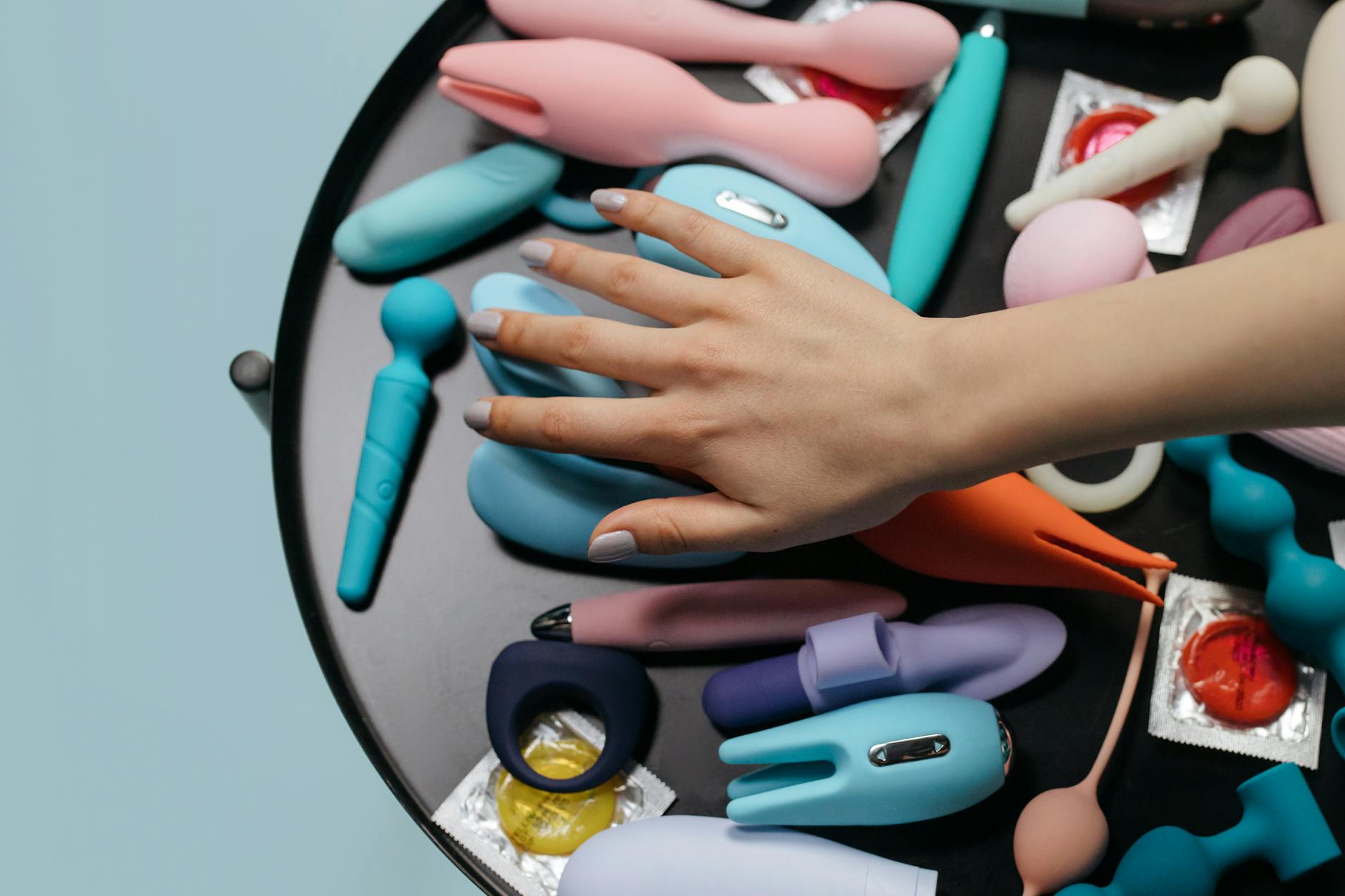
How to Choose the Right Lemon Vibrator for Your Body Type
One person's perfect clitoral vibrator is another person's too-intense experience. Here's how to find yours based on anatomy, sensitivity, and what your body actually needs.
Buying a lemon clitoral vibrator without understanding your body first is like choosing glasses without an eye exam. You might get lucky. Or you might end up with something that feels completely wrong. The anatomy of your vulva is as individual as your fingerprint, which means the vibrator that works for your best friend might make you uncomfortable or miss the mark entirely.
Here's what nobody talks about: most people spend more time researching a coffee maker than they do thinking through what their clitoris actually needs. Then they're surprised when a toy doesn't deliver. This post is going to change that.
Your clitoris isn't just the visible bump. It has a shaft, a hood, and internal structures that extend deeper than most people realize. Some of us have a prominent clitoral glans that sits exposed and highly sensitive. Others have a clitoral hood that covers most of the glans, requiring more direct or sustained pressure to feel stimulation.
There's also the spacing between your clitoris and the rest of your vulva. Some people have clitoral tissue positioned higher, some lower. This matters because it determines which angle and size of vibrator actually reaches you effectively.
The best lemon vibrators work because they use air-suction or pulsing stimulation rather than straight vibration. But the shape, size, and intensity still need to match your specific anatomy. If your clitoris is deeply hooded, a toy that relies on broad surface contact won't work. If you're externally pronounced, something too narrow might feel sharp rather than pleasurable.
Lemon suckers and clitoral vibrators come in different diameters. Smaller openings (around 1.5 inches) create more concentrated pressure and tend to work better for people with sensitive or easily stimulated clitorises. They also let you target the exact spot without much margin for error.
Larger openings (2 inches or more) distribute stimulation across a broader area. This is gentler and works well if your clitoris is less prominent or if you have tissue sensitivity that benefits from diffused rather than pinpoint contact.
The curve and angle matter too. A curved toy follows the contour of your vulva, which usually feels more natural than something completely straight. If you tend to position your vulva a certain way during sex or masturbation, that's the angle to match. The Lem vibrator, for example, is designed with a curved tip that accommodates different vulval anatomy without requiring awkward positioning.
One detail most people miss: some vibrators have a sealed head that delivers suction, while others have a more open design. Sealed heads create more intense sensation because they build pressure. If you're new to air-suction toys or have high sensitivity, an open or partially open design gives you more control over intensity.
When you say your clitoris is "sensitive," that could mean three different things. It's crucial to know which one applies to you because the solution is different in each case.
Oversensitivity. Your clitoris feels too intense with direct touch and you sometimes experience discomfort. This usually calls for wider surface area, softer contact, and lower initial intensity. You might need a vibrator with a gentle suction or broad pulsing pattern rather than focused stimulation.
Numbness or reduced sensation. You don't feel much, even with pressure or vibration. This sometimes happens after hormonal changes, medication side effects, or age-related tissue changes. For this, you want concentrated, targeted stimulation. A smaller opening and higher intensity setting usually works better, though you'll want to start low and build up.
Inconsistent sensitivity. Some days you're sensitive, other days you're not. This pattern is often linked to hormonal cycles. The best approach is a vibrator with multiple intensity levels so you can adjust on the fly. An air-suction toy like a lemon clitoral vibrator gives you more control than a straight vibrator.
If you've experienced a recent change in sensitivity, that's worth exploring with a healthcare provider, especially if accompanied by pain or structural changes. What feels like a toy issue might actually be pointing to something else going on.
Many people assume they need the "most powerful" option. In reality, most of us use somewhere in the middle, and having lower settings is more useful than having maximum. You can always turn intensity up, but you can't bring it down mid-session if there's no room below where you are.
Look for toys with at least three intensity levels. Some people benefit from toys with pattern variation (pulsing, ramping, etc.) rather than just steady vibration or suction. For many, patterns feel more natural and orgasm-friendly than constant intensity.
The vast majority of quality clitoral vibrators use medical-grade silicone, which is smooth, body-safe, and easy to clean. Some have a slightly textured surface, which some people prefer. Texture can add another dimension of sensation, but it can also feel overwhelming if you're prone to oversensitivity.
If you have sensitive skin or vulval dermatitis, you'll want smooth silicone every time. Textured surfaces can trap bacteria or irritate already reactive tissue. The toy itself isn't causing the problem, but the texture is making it worse.
Durability also ties to material. A lemon sucker that's made from thin silicone will degrade faster than one with better construction. You're not just paying for the brand when you pay more, often you're paying for materials that will last through years of regular use.
Some people masturbate in a specific position that's basically non-negotiable. Maybe you lie on your back, or you prefer being on your side. Maybe you like penetration plus external stimulation at the same time. Your vibrator needs to work in the positions your body actually uses, not in an imaginary ideal position.
If you're lying down, a toy with a handle or extended shaft is often more comfortable than something tiny that requires you to twist your wrist awkwardly. If you like hands-free sensation, look for toys designed to stay in place during partner sex or with a harness.
The weight matters too. A heavier toy can feel substantial and grounding, but it can also get tiring if you're using it for 20+ minutes. Lighter toys work better for longer sessions, especially if you have wrist or arm fatigue issues.
Some lemon vibrators are nearly silent. Others are noticeably loud. If you live with roommates, share walls, or prefer privacy even when you're alone, noise matters. Air-suction toys tend to be quieter than traditional vibrators, which is one reason they're so popular.
Discrreteness extends to storage and appearance. Some people want a toy that looks exactly like what it is. Others prefer something that could pass as a beauty device if someone stumbled across it. There's no right answer, just know what you need.
Waterproof toys are easier to clean and double as shower companions if that's something you're interested in. They also last longer because water damage is one of the main ways toys fail. Most quality clitoral vibrators are fully waterproof, but confirm before buying.
Easy cleanup removes friction from regular use. If your toy requires special cleaning products or careful disassembly, you're less likely to use it consistently. Silicone toys that are fully waterproof can usually just be rinsed under water and dried.
You won't know if a vibrator is right until you actually use it. That's not a failure. That's normal. Some of the best recommendations come from people who tried something, found it wasn't their style, then figured out what they actually needed.
The first time you use a new toy, approach it without expectation. Don't expect an immediate orgasm or earth-shattering sensation. Spend 5-10 minutes exploring different intensity levels, angles, and patterns. Notice what feels good and what doesn't. This is information, not judgment.
If something doesn't work after three or four sessions, it's probably not the right fit for your body. Move on. If something works for one session but not the next, that might be a sensitivity or arousal timing issue, not a toy issue. Context matters.
Small openings (1.5 inches or less) create concentrated stimulation and work best if your clitoris is easily stimulated or prominently positioned. Larger openings (2 inches or more) distribute sensation and feel gentler, which many people prefer, especially if you have high sensitivity or a hooded clitoris. If you're unsure, medium (around 1.7 inches) is often a safe starting point.
Both matter, but intensity is usually more important. Start with a toy that has at least three levels and adjustable intensity. Pattern variation (pulsing, ramping) is a bonus that many people love, but having control over how strong the sensation is matters more. You can use a high-intensity toy on a lower setting, but you can't go below a toy's minimum intensity.
Yes. Waterproof toys last longer, are easier to clean, and give you more flexibility in where and how you use them. Most quality clitoral vibrators are waterproof, so it shouldn't be a premium feature anyway.
Try it on the lowest setting first. If even the lowest setting feels uncomfortable or numb, the toy isn't the right fit. If lower settings feel great but you want more intensity as arousal builds, that's normal. You want a toy that has room to grow with your arousal, not one that starts too intense.
Toys designed with clitoral anatomy in mind (like lemon vibrators and clitoral suckers) tend to work better than general toys adapted for this use. Clitoral tissue responds differently than other body parts, so specialized design matters. Air-suction technology, in particular, is specifically suited to clitoral stimulation in a way most vibrators aren't.
Look for a toy with multiple intensity levels and ideally pattern variation. This gives you flexibility to adjust to where your body is on any given day. If your sensitivity changes significantly with hormonal cycles, an adjustable toy is more valuable than a "powerful" one.
Your clitoris isn't a mystery. It's a specific body part with specific anatomical features, and those features determine which lemon vibrators and clitoral vibrators will work best. Size, shape, sensitivity level, intensity range, and design all play a role.
Take the time to understand your anatomy before buying. Know whether your clitoris is hooded or prominent, sensitive or needs more pressure, easily stimulated or hard to reach. Know your favorite positions and whether you prefer pinpoint or broad stimulation. Then pick a toy that matches those specifications.
The right toy isn't the most expensive or the most popular. It's the one that works for your specific body. And once you find it, you'll know immediately.
If you're still sorting through your preferences or want guidance tailored to your unique situation, we're here to help. Reach out at My Lem Shop and let's find your fit.