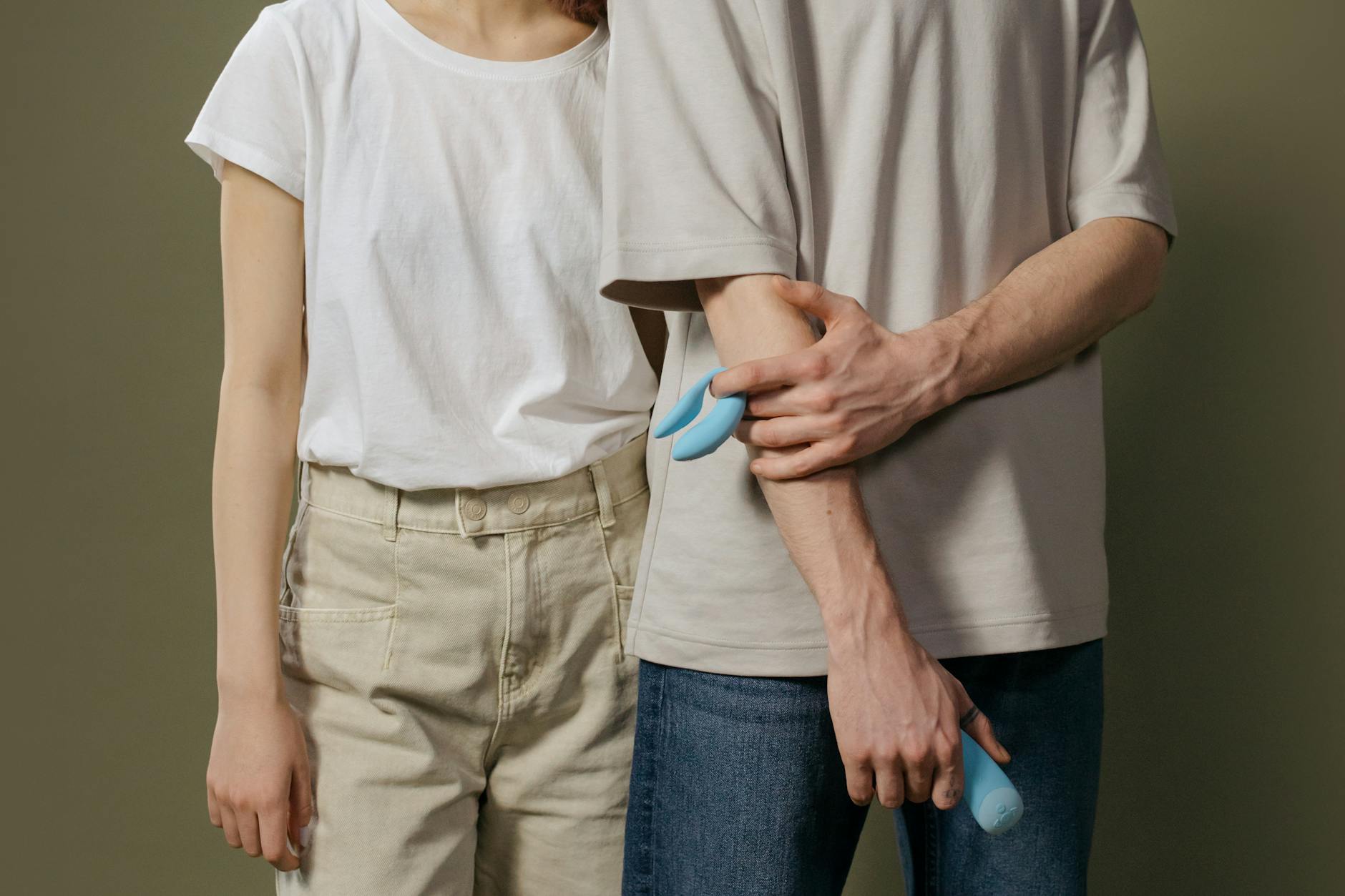
Why Lemon Vibrators Feel Different After 40 and How to Adapt
Your sensitivity shifts, your body's rhythm changes, and what worked at 35 might need tweaking now. Here's what's actually happening and how to reset your lemon clitoral vibrator practice for this chapter.
Honestly, something shifts around 40. Not in a catastrophic way. More like a recalibration. The body you've been living in for four decades suddenly decides it has opinions about speed, pressure, and timing.
This matters if you use a lemon clitoral vibrator. Because if your Lem or another suction-style toy worked beautifully at 35, and now it feels weirdly numb or overstimulating or just... off, you're not broken. You're not losing sensation. You're experiencing what happens when hormones, nerve sensitivity, blood flow, and muscle tone all shift at the same time. And the fix isn't to panic. It's to adjust.
Let me walk you through what's actually happening in your body after 40, why your lemon vibrator might feel different, and exactly how to recalibrate your practice so pleasure stays front and center.
Collagen decreases. This affects skin elasticity everywhere, including your vulva. The tissue becomes slightly thinner over time, which means it's more sensitive to direct pressure and less resilient to intense suction if you're not being deliberate about it.
Blood flow changes. Cardiovascular fitness matters more than it did at 30. If you're sedentary, arousal takes longer because blood needs to reach your genitals efficiently. If you're active, you likely notice faster engorgement and more intense sensation. This is one reason why people often report better orgasms after they start moving their bodies regularly.
Nerve sensitivity reorganizes. This is the counterintuitive part. You don't lose nerve endings. But the nerves themselves can become less responsive to repetitive stimulation if you've been using the same patterns for years. The clitoris has about 8,000 nerve endings. Age doesn't reduce that number. But your nervous system's response to consistent input does flatten slightly. Think of it like a song you love playing on repeat. The neurons tune out a little.
Muscle tone in the pelvic floor shifts. Everything from childbirth to sitting to gravity affects this. Looser pelvic floor muscles mean less tension around the clitoris, which changes how stimulation registers. Sometimes this is good (less pain, more direct pleasure). Sometimes it means you need more intensity to feel the same effect.
You're not imagining this. If your lemon clitoral vibrator felt incredible at 38 and now feels either too intense or weirdly muted at 42, three things might be happening.
First, you've built tolerance to the pattern. If you've been using the same mode (say, the middle setting on your Lem) multiple times a week for years, your nervous system has learned that input. It stopped novelty-seeking. This isn't your toy getting worse. It's your body adapting. Humans adapt to everything. Lights, sounds, sensations. Over time, the nervous system says "cool, we've seen this before, less interesting now."
Second, your tissue response has changed. Thinner, less elastic tissue means suction feels sharper if you're using full-cup pressure. The lemon sucker's genius is that it creates a seal and gentle pressure. But "gentle" is relative. At 40, what felt like "firm and amazing" at 30 might now feel like "actually kind of intense." This is information, not a problem.
Third, your arousal timeline has shifted. Blood takes longer to reach your genitals. Your clitoris takes longer to engorge. That means stimulation that worked when you were already halfway to aroused might not land the same when you're starting from neutral. This is why "more foreplay" isn't a cliché at 40. It's actual biology.
Most of what I hear from people over 40 is that vibrators "don't work like they used to." Usually what's actually happening is that they're jumping straight to the toy without building arousal first. At 35, maybe a 30-second warm-up was enough. At 42, budget 10-15 minutes of touch, kissing, mental focus, or solo exploration before the lemon vibrator comes out. This isn't longer foreplay because your body is "broken." It's smarter sequencing because your nervous system needs a proper invitation.
Instead of turning your Lem up to level 4, try switching patterns more often. If your toy has multiple modes, use them in rotation. Your nervous system lights up for novelty. Try pattern 2 for 30 seconds, pattern 1 for 45 seconds, pattern 3 for a minute. The total stimulation is the same. The novelty rewires engagement.
If your lemon vibrator only has one pattern, vary the pressure instead. Light seal, medium seal, full seal. Vary the angle. Vary the rhythm of application. Your clitoris has texture and sensitivity variation. Stimulate different spots.
If your Lem or another lemon sucker's lowest setting now feels like the right intensity (where it used to feel too weak), that's fine. Start there. You've recalibrated. Use the lower setting for longer if you want the same total stimulation.
If even the lowest setting feels intense, you're probably either underoused or dealing with temporary sensitivity (which can happen with certain phases of the cycle, hydration status, or stress). Stop. Spend more time on manual stimulation. Return to the toy when arousal is deeper.
At 40, natural lubrication can be less abundant, especially if you're not cycling through hormonal phases (if you're on hormonal birth control, have had surgery, or are approaching menopause). A light water-based lube changes everything. It reduces friction between your tissue and the toy, which means you feel the suction more clearly and the pressure less sharply. This is not a sign of dysfunction. It's smart adaptation.
Your nervous system might need more time to build to orgasm now. Instead of 5-10 minutes, plan for 15-20 if you're relearning your body. This isn't depressing. Many people report that longer sessions feel better at 40 than rushed sessions ever did at 25.
There's always a stress component. If you're managing aging parents, career shifts, relationship transitions, or body image stuff, your nervous system is partially offline before the vibrator even enters the picture. This is where a lot of people go wrong. They assume the physical tool is broken when really their mental bandwidth is fractioned.
I work with couples on this constantly. At 40, pleasure requires presence in a way it didn't at 25. Your body won't lie about whether you're actually available. If you're thinking about emails or whether you locked the door, your clitoris knows. Give yourself actual privacy. Turn off notifications. Tell your partner you need 20 uninterrupted minutes. This sounds basic. It's revolutionary for people over 40.
If you've adjusted your arousal time, varied your patterns, lowered your intensity, and you're still feeling almost nothing, or if stimulation causes pain, that's worth checking with a gynecologist. Sometimes sensation loss is tied to medication changes (antidepressants, blood pressure meds, hormonal shifts). Sometimes it's nutritional. Sometimes it's a vascular thing. A good doctor can rule that out in one conversation.
But most of the time, when people over 40 say their lemon vibrators "stopped working," what's actually happened is their bodies changed and they kept using the same settings and patterns without adjusting. You wouldn't wear the same running shoes at 45 as you did at 25. Same logic. Your nervous system, your tissue, your blood flow, your pelvic floor all deserve the same kind of thoughtful adaptation.
Here's what I've noticed clinically: people over 40 who do this recalibration work often report their best orgasms yet. Because unlike at 25, they're not rushing. They're present. They understand their bodies well enough to notice what's shifted and adjust. They use better tools. They're not performing for anyone but themselves.
Your lemon clitoral vibrator didn't fail. Your body just got more interesting. The pleasure is still there. It just requires you to pay attention, adapt, and give yourself permission to change your approach. That's not loss. That's mastery.
Your nervous system has adapted to the pattern. If you've used the same mode at the same frequency for months or years, your clitoris has learned that input and deprioritizes it. This is normal neurological adaptation, not permanent numbness. The fix: vary the patterns, take breaks from the toy (two weeks off resets sensitivity), or try different pressure levels. Your sensation isn't gone. It's just tuned out the repetition.
Not even close. Sensation changes and libido changes are completely separate. You might have lower desire if you're stressed or going through hormonal shifts like perimenopause, but that's hormonal. Physical sensation can absolutely stay strong or even improve at 40 if you're using the right approach. Many people report more intense pleasure after 40 once they understand what their bodies need.
Not necessarily. Most people over 40 actually need less intensity, not more, because their tissue is more sensitive. A stronger toy might feel overwhelming or even painful. Before upgrading, try the recalibration steps: adjust your arousal time, vary patterns, use lower settings for longer, and add lubrication. Often the toy you have is exactly right. Your approach just needs tweaking.
Collagen loss and tissue changes are real, but they're minor compared to nervous system adaptation and arousal patterns. You don't lose nerve endings. You lose responsiveness to repetition and you need better arousal sequencing. That's fixable. Read more about how your body changes to understand the specifics of perimenopause and menopause if that applies to you.
Absolutely. A lemon sucker's magic is that it stimulates without friction. If your tissue is thinner or sensitivity is flatter, the suction approach is often better than traditional vibration because it engages the whole clitoral complex, not just the surface. Check out why lemon vibrators work for sensation challenges if you're starting from lower baseline sensation.
Yes. Your body will respond differently to your partner's touch too. Blood takes longer to flow. Arousal takes longer. But this isn't a problem to solve. It's just information. Better partners adapt by understanding what you need now, which often means slower starts and longer engagement. Talk through this with your partner using this guide on navigating vibrators and intimacy together at any age.
Your lemon vibrator isn't broken. Your body at 40+ is just asking for a smarter, more intentional approach. That's not depressing. It's actually liberating. Because it means pleasure doesn't decline with age. It evolves. And honestly, evolved pleasure usually beats early-twenties pleasure by a mile.
If you're navigating these shifts and want to talk through what's actually going on with your body or your relationship, reach out. This is exactly the kind of recalibration work I help people with all the time.
Your pleasure matters at every age. Sometimes it just takes a little adjustment to make it sing.