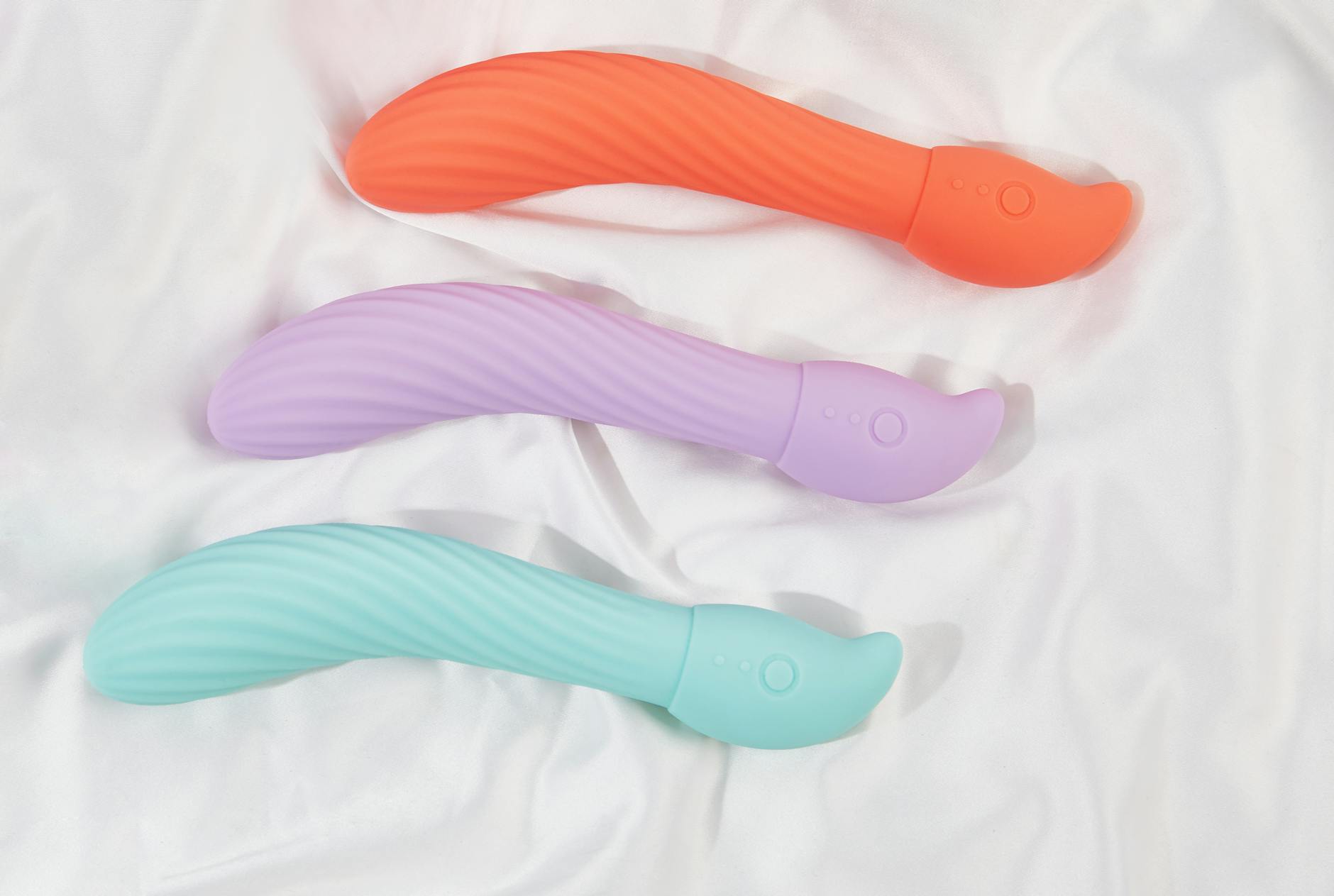
How to Choose the Right Lemon Vibrator for Your Body Type
Your clitoral anatomy is unique. So is what works for you. A guide to matching your body, sensitivity level, and pleasure style to the lemon vibrator that actually fits.
Here's the thing nobody tells you: the best lemon vibrator for your friend, your partner, or that glowing review online might be completely wrong for you. And that's not a flaw in the device. It's anatomy.
Your clitoris has a shape, size, and sensitivity profile that's genuinely unique. The angle of your vulva, the depth of your clitoral hood, how close your external clitoris sits to the surface, whether you prefer direct contact or indirect stimulation. All of it matters when you're picking a clitoral vibrator. The right one becomes an extension of what your body already wants to do. The wrong one is just expensive frustration.
I've worked with hundreds of people navigating this choice, and the pattern is always the same: they pick based on reviews or aesthetics or what their partner liked, then feel disappointed when it doesn't work. Then they blame themselves. The actual issue is usually just a mismatch between the device and their body.
Before you even look at a lemon vibrator, you need to know what you're working with. And I'm not talking about shame or medicalization. I'm talking about simple anatomical facts that change everything about what will feel good.
Your clitoris has an external head (the glans) and internal legs (the crura) that extend into your body. The external part is what you can see and feel. It ranges from about pea-sized to larger depending on the person, and it sits under a hood of skin that covers and protects it. That hood is important because it determines whether you respond better to direct or indirect stimulation.
If your clitoral hood is pronounced (which is completely normal), direct contact with the tip might feel like too much. The suction technology in lemon vibrators works beautifully for this because it creates sensation without the friction of traditional vibrators pressing directly on sensitive tissue. If your clitoris sits closer to the surface with less hood coverage, you might tolerate or even prefer more direct pressure.
The other piece: clitoral sensitivity isn't one thing. Some people have a hypersensitive glans that needs a gentle build-up. Others are less sensitive in the tip and need stronger stimulation to feel anything at all. Neither is better. They're just different starting points.
This is the detail that usually gets skipped, and it's why so many people give up on a vibrator after the first try.
When you're not aroused, your clitoris is less engorged, less sensitive, and may not respond well to vibration. When you're aroused, blood flow increases, the glans swells slightly, the clitoral hood retracts a bit, and suddenly the same sensation feels entirely different. Stronger. More present. Better.
This means two things for choosing a lemon vibrator: one, don't test it for the first time when you're just casually checking things out. Give yourself actual warm-up time, actual mental space, actual desire building. Two, pick a vibrator with adjustable intensity because what you need to cross the threshold into arousal is different from what you need to stay there.
Many lemon vibrators have multiple patterns and speeds. That's not marketing filler. That's the device accommodating the fact that your body changes over the course of a session.
If you've used traditional vibrators before, you might be wondering why lemon suckers are worth reconsidering. The mechanics are genuinely different, and that difference matters more for some anatomies than others.
A lemon clitoral vibrator works through pulsing suction rather than high-frequency vibration. It creates a sensation more like the feeling of oral sex, with rhythmic pressure rather than buzzing. This approach works especially well if you have sensitive clitoral tissue, if direct vibration feels overwhelming, or if you prefer broader stimulation rather than pin-point intensity.
Traditional vibrators send vibrations through your tissues. Lemon vibrators create sensation through rhythmic pressure and release. If you respond well to external pressure, grinding, or broader contact, you'll likely find a lemon vibrator more satisfying. If you've always loved the intensity of deep vibration, you might still prefer traditional toys.
The honest answer: you might need to try both to know. But if you've abandoned traditional vibrators because they felt too intense, too buzzy, or made your clitoris feel numb, a lemon sucker might be the shift you've been looking for.
Lemon vibrators come in different sizes and contact head shapes. This isn't cosmetic variation. It's functional.
A smaller contact head concentrates sensation on a tighter area. That works beautifully if you have a smaller external clitoris or if you like precisely targeted stimulation. A wider contact surface spreads the sensation across a larger area, which works better if you prefer broader, less intense contact or if your clitoris sits further back under the hood.
The angle of the contact surface also changes the experience. Some lemon vibrators have a flat opening, some have a slight curve. The curve is designed to fit the natural shape of your vulva and to angle the suction in a way that feels more natural during use.
Here's what I tell people: if you have significant vulvar tissue around your clitoris, a wider contact head will create a better seal and more even sensation. If your clitoris is more prominent and you like to target it directly, a smaller head gives you that precision. And if you've never tried a clitoral vibrator before, start with a mid-sized head that gives you flexibility to experiment.
Let's address the actual barrier that stops most people from enjoying a vibrator: picking one that's too intense or not intense enough.
Clitoral sensitivity exists on a spectrum. Some people can achieve orgasm with a light touch vibrator. Others need much stronger stimulation to feel anything. This isn't about being broken. It's about your nervous system and how your particular clitoris is wired.
When you're shopping, look for a lemon vibrator with multiple intensity settings. At least three, ideally more. This serves two purposes: it lets you start gently and build intensity, which is better for arousal and more pleasurable. It also means if the intensity changes over time (which it does as you age, as hormones shift, as you get more experienced with sensation), the vibrator grows with you instead of becoming obsolete.
If you're buying your first lemon clitoral vibrator and you're not sure where you fall on the intensity spectrum, err on the side of lower initial power. You can always turn it up. You can't turn down overstimulation.
The final piece that actually matters: give any vibrator at least three full sessions before you decide if it works.
The first time, you're learning the device, processing the sensation, maybe feeling self-conscious or distracted. The second time is better but still novel. By the third time, your body has settled into what this thing actually does, and you can tell if it's right for you or if you need something different.
I've seen people abandon perfect vibrators because they expected magic on session one. I've also seen people struggle through three disappointing sessions with a device that was genuinely the wrong choice. The difference is: do you feel any pleasure building at all, even small? Do you feel an urge to keep using it? Does the sensation feel like it's going somewhere good?
If the answer to those is yes, give it more time. If the answer is no, it's probably the wrong device for your body.
Choosing the right lemon vibrator isn't about finding some mythical perfect toy. It's about understanding what your particular clitoris responds to, then matching it with a device designed for that. Your pleasure isn't a mystery to solve. It's an anatomy question to answer.
If you have a pronounced clitoral hood, your clitoris is naturally protected and insulated. Direct vibration through that hood can feel diffuse and less effective. Suction-based lemon vibrators work better because they create pressure and release without requiring direct contact. If your clitoris sits closer to the surface with less hood coverage, you might tolerate more direct contact. You can check this yourself: gently push the skin above your clitoris upward. If it significantly changes what you feel, your hood is playing a major role in your sensitivity.
No. Using a vibrator that's too intense might make your clitoris temporarily less sensitive, which is uncomfortable but not permanent. This desensitization usually resolves within a few hours to a few days of not using the device. The better question isn't whether it will damage you, but whether it's actually enjoyable. If a vibrator consistently feels bad or overwhelming, stop using it and try something else. Your pleasure matters more than proving you can tolerate intense sensation.
Try a low-intensity lemon sucker on the gentlest setting during genuine arousal time, not testing mode. If it feels manageable and potentially pleasurable, sensitivity isn't the issue. The vibrator you were using before was probably just too intense for your starting point. If it still feels too much, your clitoris is genuinely more sensitive, and you'd benefit from a device marketed for sensitive tissue, longer warm-up time, or even a manual option that lets you control pressure directly.
You actually do need multiple levels. Not because of marketing, but because your clitoris responds differently at different stages of arousal. What feels right when you're just getting interested might be too mild once you're fully aroused. A vibrator that lets you start at level one and build to level five adapts to your natural pleasure curve. Single-speed vibrators miss that flexibility entirely.
This is common and solvable. If one of you needs direct intense stimulation and the other needs gentle suction, you might genuinely need two different devices. That's not a failure or a waste. It's just anatomy. Alternatively, pick a lemon clitoral vibrator with strong adjustability and experiment together with different intensity levels. What feels overwhelming to one person might feel perfect to the other, and you can take turns finding the sweet spot. See our guide on how to talk to your partner about using a lemon vibrator together for specific conversation strategies.
Significantly. If you've been using the same vibrator for years and suddenly it feels different, your body has changed, not the vibrator. Hormonal shifts, aging, and life transitions all affect clitoral sensitivity and how quickly you achieve arousal. Tissue also changes. What worked great at 25 might feel too intense at 45, or vice versa. If you're in your 40s or beyond and struggling with a device you've always loved, it might be worth exploring why lemon vibrators feel different after 40 and whether a different intensity level or contact head shape would serve you better now.