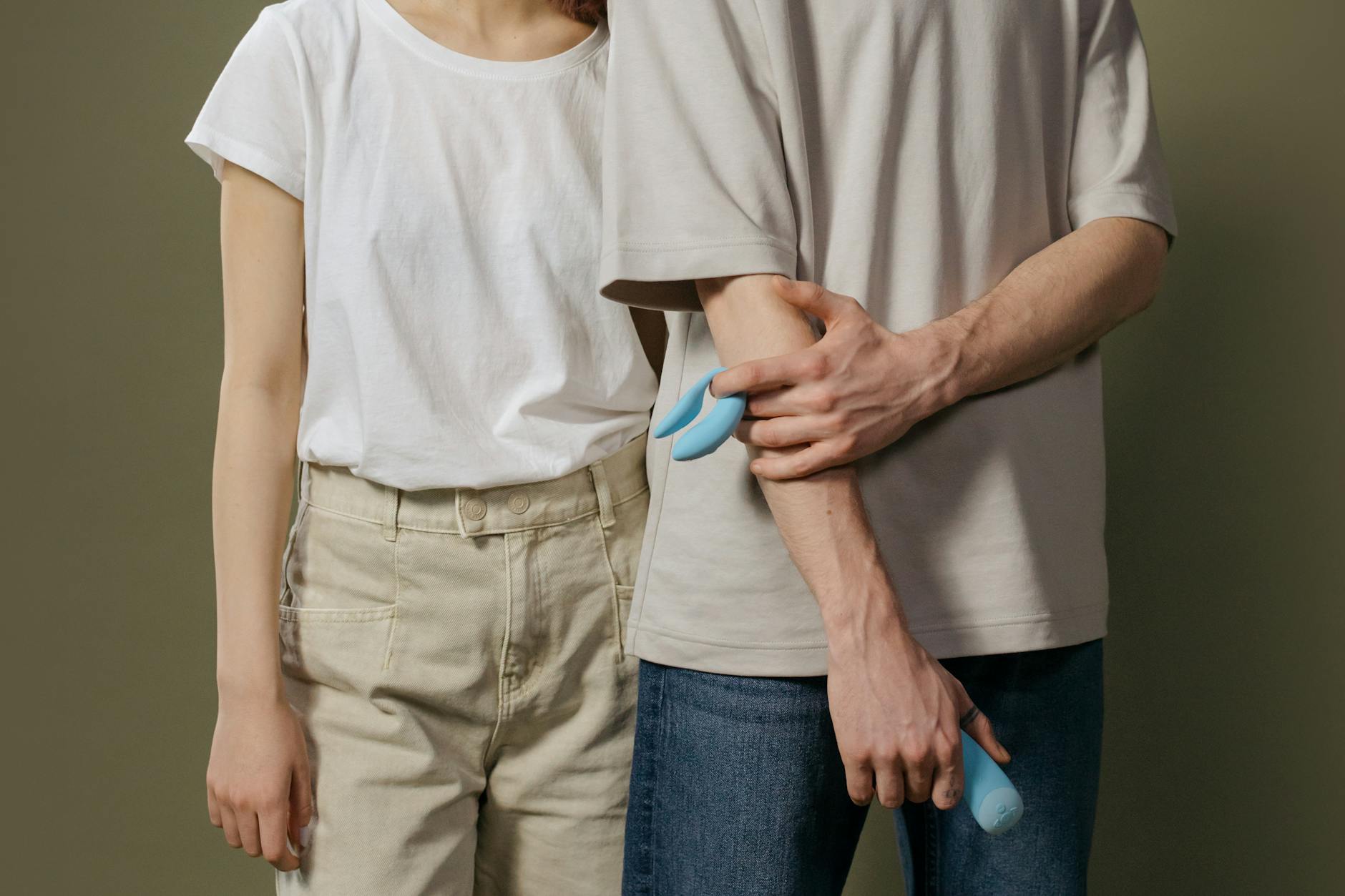
How to Use a Lemon Vibrator When External Stimulation Feels Too Intense
Your clitoris suddenly feels raw or oversensitive. Here's why it happens, what it means, and exactly how to work with your lemon vibrator instead of against it.
You bought a lemon vibrator, or you already had one, and suddenly direct contact feels like too much. Not in a "I don't want this" way, but in a "this actually hurts a little" or "this makes me want to jump out of my skin" way. That's not a sign you're broken. It's usually information.
Oversensitivity on the clitoris happens more often than people think, and it has several completely fixable causes. Here's what's actually going on and how to use your lem vibrator in ways that feel genuinely good instead of overwhelming.
The clitoris has roughly 8,000 nerve endings packed into a tiny space. When those nerves are fired up, they fire up completely. For some people, that intensity is exactly what they want. For others, especially at certain times, it's just too much.
Three main reasons this happens:
Hormonal shifts. If you're in your cycle, approaching ovulation, or dealing with hormonal birth control changes, clitoral sensitivity can spike. The same surge of hormones that increases arousal also increases sensitivity to touch. More arousal doesn't always mean more tolerance for intensity.
Repetitive stimulation. If you've been using the same vibrator in the same way for weeks, your nerve endings can develop what's basically a local inflammation response. They're not numb exactly. They're irritated. The tissue around the clitoris swells slightly, making direct pressure feel sharper instead of pleasurable.
Pelvic floor tension. When your pelvic floor muscles are tight, the clitoris sits in a more exposed position. Tight muscles mean less cushioning, which means vibration feels more direct and intense. This is one of the most commonly missed causes of "sudden" oversensitivity.
Here's the thing about a lemon clitoral vibrator design. The suction pattern and the shape mean you have options beyond direct on-the-button contact.
Layer your contact. The clitoris is partially internal. When you position the lemon vibrator slightly off-center, or lower, or at an angle, you're stimulating the internal branches of the clitoral network without hammering the external glans directly. This gives you all the pleasure without the raw feeling.
Start with the vibrator positioned so the opening sits over the inner labia rather than directly on the clitoris. The sensation will travel inward and upward rather than concentrating on one spot. Turn up the intensity through patterning, not pressure. Suction patterns 2 or 3 on your lemon vibrator give you complexity and variation without the flat-out intensity of patterns 5 and above.
Time your sessions carefully. If oversensitivity is tied to your cycle, track it for two months. Most people who have hormonal sensitivity find a window about 4-5 days per cycle where direct external work feels better. Use that window for exploration. Outside that window, stick with indirect or internal focus. Your lemon vibrator can work brilliantly for both.
Warm up differently. Oversensitivity often comes from not enough arousal, which sounds backward but makes sense. When you're underaroused, tissues haven't plumped up yet, so touch feels more mechanical and less cushioned. Spend 15-20 minutes on foreplay or solo warm-up before you even pick up your lem vibrator. Your own touch, a partner's hands, or a lower-intensity vibrator first. Get genuinely aroused before you ask your body to handle intense external stimulation.
If you suspect tight pelvic floor muscles are the culprit, this is the fastest fix and the one people skip most often.
Tight pelvic floor doesn't feel tight the way a tight shoulder does. It usually feels like oversensitivity, numbness, or discomfort. To check, try this: lie down, relax completely, and try to insert a finger or small toy inside. If you feel a strong involuntary clenching or you can't fully relax those muscles, that's your answer.
The fix isn't Kegels. It's the opposite. You need to practice relaxing and lengthening those muscles.
Start with slow, intentional breathing. On your exhale, imagine your pelvic floor dropping like an elevator descending. Don't push, don't bear down. Just release. Do this for five minutes daily. Then move to pelvic floor stretches: child's pose, deep squats, happy baby pose. Spend 2-3 minutes in each stretch, breathing fully.
Once your pelvic floor feels genuinely relaxed, your clitoris will sit in a more natural position. Direct contact with your lemon vibrator will feel more diffuse and less sharp. The change is usually noticeable within a week.
There's a difference between "this feels uncomfortable because I'm not ready yet" and "this feels like actual pain." The first is fixable with the techniques above. The second needs attention.
True pain (not discomfort, actual pain) during or after use can signal inflammation, micro-tears, or an infection. If you're experiencing sharp pain, burning that lasts hours after you stop, or visible irritation, take a break and see a gynecologist. A few days of rest and topical hydrocortisone can help, but a professional should clear you first.
Discomfort that's more mental than physical ("this feels like too much intensity," "I feel exposed," "this is triggering my anxiety") is different. That's usually about pacing yourself, building confidence, and using lower settings on your lemon vibrator while you adjust. It's not wrong to feel that way, and it's not a reason to force yourself.
Oversensitivity isn't always physical. Sometimes it's psychological tension masquerading as physical sensitivity. If you're anxious about being touched, or if you have a history of unwanted touch, your nervous system might be protecting you by flagging all external stimulation as "too much."
In this case, using your lemon vibrator might actually be healing. But it requires a different approach. Start with the lowest setting. Focus on pleasure rather than orgasm. Let yourself stop anytime without judgment. Sometimes just sitting with the vibrator against your body without turning it on can help your nervous system learn that this touch is chosen and safe.
If you're working through sexual shame or trauma, a therapist who specializes in sexuality can help you build trust in your body again. Pleasure is part of healing, but it shouldn't feel like another obligation.
Four things to try today if direct external stimulation with your lemon vibrator feels too intense:
1. Switch to pattern mode. The specific patterns built into your lem vibrator (patterns 2, 3, 4) feel less intense than constant vibration at the same frequency, even at lower power levels. The variation gives your nerve endings information without fatigue.
2. Use clothing. A thin layer of fabric between your body and the vibrator reduces intensity without removing sensation. Soft cotton underwear or a silk slip makes a real difference.
3. Position lower. Move your lemon clitoral vibrator down to the vaginal opening or the perineum. The sensation travels upward and sideways, reaching the clitoris indirectly. This is genuinely pleasant for a lot of people and often gets overlooked.
4. Explore internal first. If direct external contact feels awful, try using your lemon vibrator inside first while it's turned off or on the lowest pattern. Let your body get used to the object. Then turn it on. Then move it. Small steps.
Why does my clitoris feel sore even when I'm not using anything?
If soreness persists without stimulation, that's inflammation, not oversensitivity. Rest, avoid friction, and see a gynecologist. It can be a minor irritation or infection that needs treatment, and a professional can tell you which.
Can oversensitivity mean I'm not supposed to use vibrators?
No. It means you need to use them differently. How to use a lemon vibrator when you struggle with sensation consistency explores this in depth. The vast majority of people with temporary oversensitivity adapt beautifully once they adjust their approach.
Is it normal for sensitivity to change month to month?
Completely normal. Hormonal sensitivity, stress, sleep quality, hydration, and pelvic floor tension all fluctuate. What feels intense one week might feel perfect the next. Tracking your sensitivity over two or three months shows the pattern and helps you plan accordingly.
Does using a lemon vibrator on low settings train my body to need low settings forever?
No. Sensitivity isn't something you build or lose permanently. You're not "ruining" yourself by using lower intensities. Your body's responsiveness shifts based on context, stress, and stimulation history, but it's not linear or permanent.
What if my partner uses the lemon vibrator on me and it feels too intense?
Communication is everything here. Tell them exactly: "Lower intensity," or "Move it slightly," or "Let's use a pattern instead of constant vibration." If they can't listen to your body's signals, that's a relationship issue, not a vibrator issue. How to use a lemon vibrator when desire feels one-sided in your relationship digs into this.
Is there a "best" lemon vibrator if you have sensitive skin?
The material matters more than the brand. Look for medical-grade silicone with no phthalates. Clean it before use, always use water-based lube, and take breaks. Your lem vibrator should feel like silk against skin, not plastic. If it doesn't, it's a material issue.
Can I use numbing cream so intense stimulation doesn't hurt?
Do not do this. Numbing cream masks pain that's trying to tell you something. It also prevents you from enjoying actual sensation. Address the root cause (pelvic floor tension, inflammation, oversensitivity) instead of masking it.
Oversensitivity is one of the most solvable problems in pleasure. It usually signals that something small needs adjustment. Your pelvic floor might need relaxation. Your cycle might need tracking. Your settings might need lowering. Your positioning might need shifting.
None of this means your lemon vibrator isn't right for you or that you can't have the pleasure you want. It means you're listening to your body, and that's exactly how this works. Start with the low-intensity settings, focus on indirect contact and patterning, and give yourself permission to take your time. The pleasure will follow.
If you're struggling with oversensitivity that doesn't improve with these approaches, reach out to a sexuality-informed therapist or gynecologist. You deserve stimulation that feels good, not overwhelming.